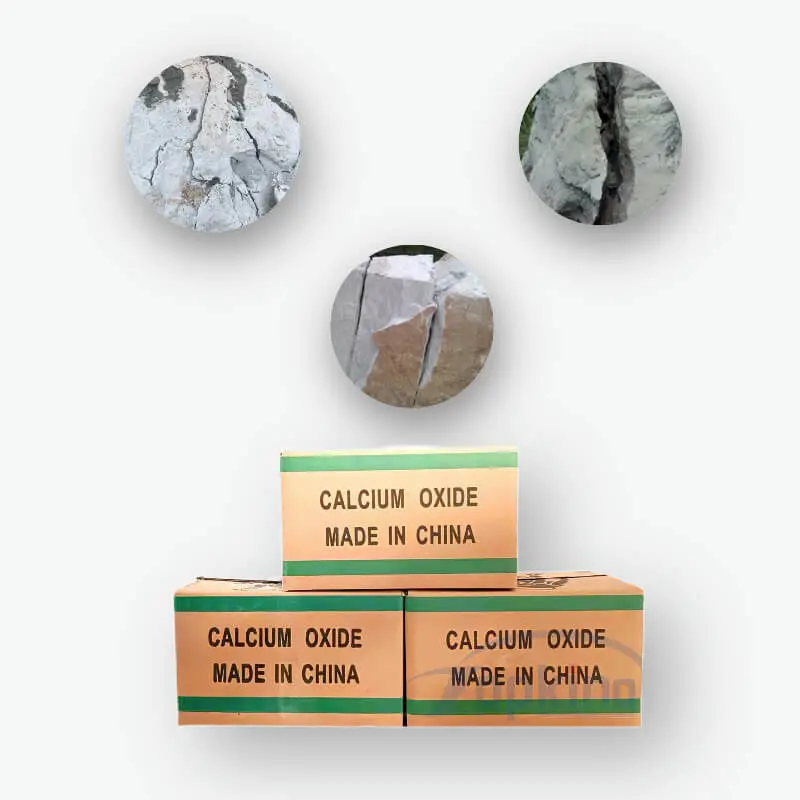
 EN
EN
 AR
AR

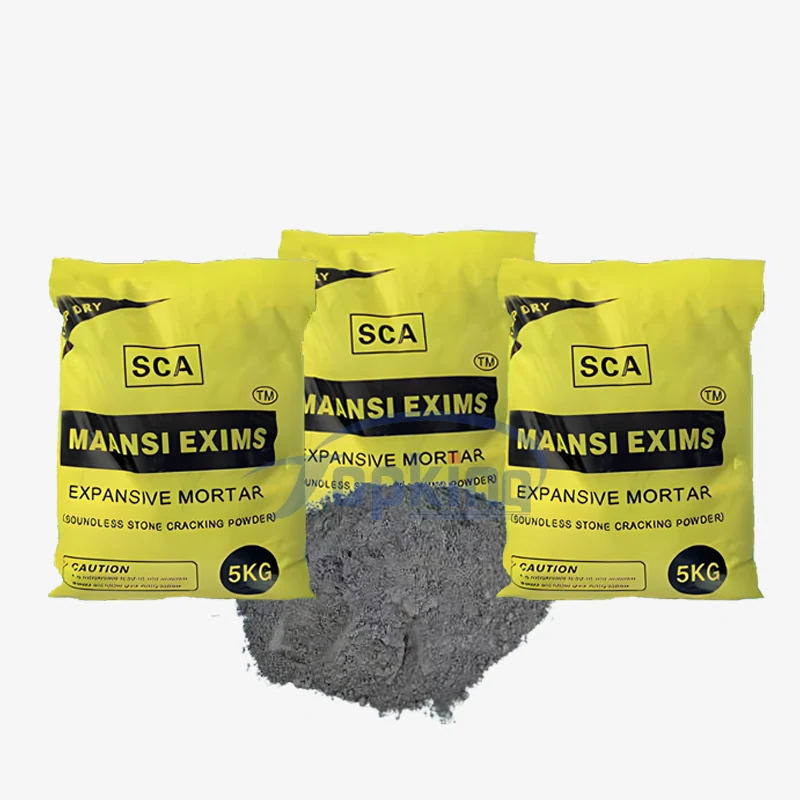
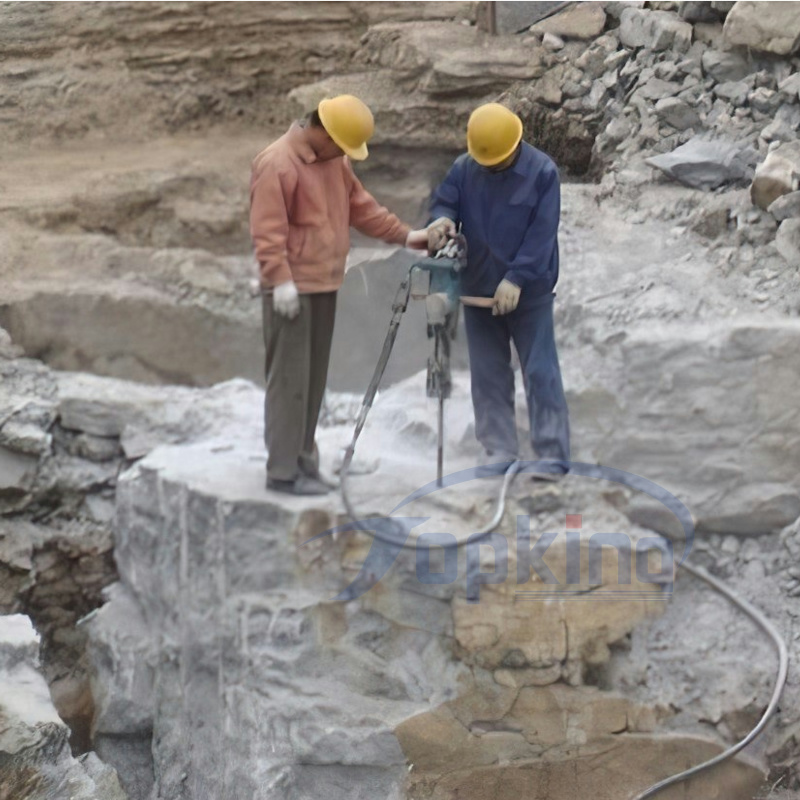
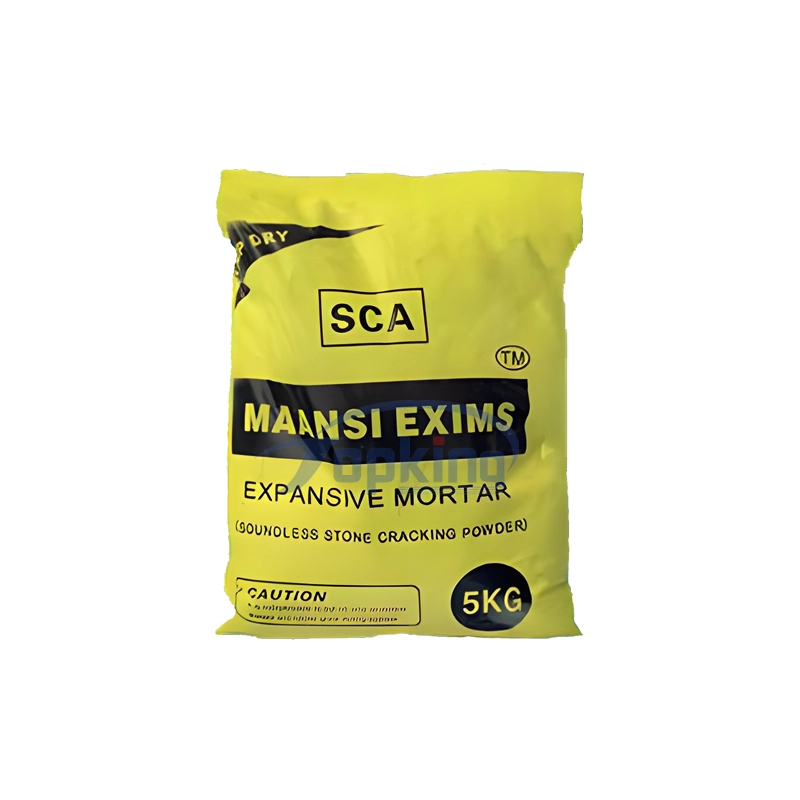
HSCA-1 High-Temperature Expansive Mortar (25°C–40°C) | Summer Grade Soundless Cracking Agent
- Technical Specifications
EXPANDAG HSCA-1 is a summer grade soundless cracking agent rated for 25°C to 40°C ambient operating conditions. It generates 120–130MPa expansion pressure through CaO hydration with retardant chemistry that controls reaction rate in hot climates — preventing blowout while maintaining full expansion force. Recommended for granite quarrying, mining, and demolition in Saudi Arabia, UAE, Oman, India, and Africa. Water ratio 28–30% by mass; use chilled water below 15°C above 35°C ambient. Borehole diameter 30–42mm. Complete filling before 07:15 AM in desert summer conditions. No blasting permit required. Non-hazardous shipping classification.
HSCA-1 High-Temperature Soundless Cracking Agent (25°C – 40°C)
Product Specifications:
Brand: EXPANDAG (Hezhou Topking Rock Drill Equipment Co., Ltd.)
Model: HSCA-1 (Summer / High-Temperature Grade)
Also Known As: Summer Soundless Cracking Agent / High-Temp Stone Cracking Powder / Desert Rock Breaking Chemical / Summer Expansive Mortar
Temperature Range: 25°C to 40°C (77°F to 104°F)
Package: 20kg sealed carton / 1-tonne FIBC bulk bag
Application: Granite quarrying, mining, and concrete demolition in Saudi Arabia, UAE, Oman, Qatar, India, and Africa summer operations.
HSCA-1 is the high-temperature grade of EXPANDAG's Expansive Mortar system — engineered specifically for tropical climates and desert quarrying environments where heat stability and blowout prevention are critical operational requirements.
HSCA-1 Technical Specifications
| Performance Item | Technical Data |
|---|---|
| Model | HSCA-1 (Summer / High-Temperature Grade) |
| Operating Temperature Range | 25°C to 40°C (77°F to 104°F) |
| Expansion Pressure | 120–130 MPa |
| CaO Purity | >=90% (batch documentation available) |
| Water Ratio | 28–30% by mass (chilled water below 15°C above 35°C ambient) |
| Borehole Diameter | 30–42mm (reduce to 30–33mm above 35°C) |
| Borehole Spacing | 30–50cm (rock); 25–35cm (reinforced concrete) |
| Crack Initiation Time | 2–5 hours at 25°C–40°C |
| Recommended Filling Window | Before 07:15 AM in desert summer conditions |
| Packaging | 20kg sealed moisture-proof carton / 1-tonne FIBC bulk bag |
| Regulatory Classification | Non-hazardous construction chemical — no blasting permit required |
| Shelf Life | 12 months in sealed packaging stored below 40°C |
EXPANDAG HSCA Temperature Grade System
| Model | Temperature Range | Regional Recommendation |
|---|---|---|
| HSCA-1 (This Product) | 25°C to 40°C | Summer / Middle East / Africa |
| HSCA-2 | 10°C to 25°C | Spring and Autumn / Standard Projects |
| HSCA-3 | -5°C to 10°C | Winter / North America / Europe / High Altitude |
Critical Protocol for Operations Above 35°C
HSCA-1 is rated to 40°C. Above 35°C, follow these field protocols to maintain safe working window:
Pre-Dawn Filling: Complete all borehole filling before 07:15 AM. Rock surface temperature rises rapidly after sunrise on exposed desert faces.
Chilled Mixing Water: Use water below 15°C. Above 35°C ambient, use iced water below 10°C. Verify with thermometer before every batch — not by feel.
Cap Boreholes After Drilling: Uncapped boreholes on sun-exposed rock can reach 44°C wall temperature by 09:00 AM even when air temperature reads 37°C. Cap immediately after drilling.
Reduce Borehole Diameter: Above 35°C, use 30–33mm rather than standard 38–42mm to increase radial confinement and reduce blowout risk.
Small Batches: Mix maximum 4–6 boreholes per batch. Discard any slurry showing signs of premature setting.
EXPANDAG Rock Drills: Use EXPANDAG pneumatic rock drills for consistent 30–42mm borehole geometry matched to HSCA-1 expansion kinetics.
Why EXPANDAG HSCA-1 for Middle East and Tropical Operations?
Retardant Chemistry for Hot Climates: HSCA-1's formulation extends the safe working window at 25°C–40°C — the reaction window that standard-grade HSCA-2 cannot maintain above 25°C.
Same 120–130MPa Pressure: Retardant chemistry delays onset — it does not reduce peak expansion force. Full pressure is achieved regardless of ambient temperature within the rated range.
Middle East Export Experience: EXPANDAG supplies HSCA-1 to quarry and construction contractors across Saudi Arabia, UAE, Oman, and Qatar with documented field application support.
No Blasting Permit: Non-explosive classification — no licence, no storage magazine, no vibration monitoring required. Reduces project regulatory burden in Saudi Arabia, India, and other regulated markets.
Factory-Direct Supply: Direct from EXPANDAG manufacturing — verified CaO purity >=90%, batch documentation on request, OEM and private-label available for distributors.
High-Temperature Soundless Cracking Agent FAQ
Q: What Is the Operating Temperature Range of HSCA-1?
A: HSCA-1 is rated for 25°C to 40°C ambient temperature at the time of filling. Below 25°C, use HSCA-2 (10°C–25°C) for better reaction rate. Above 40°C, HSCA-1 requires strict protocol adjustment — pre-dawn filling, iced mixing water below 10°C, and reduced borehole diameter to 30–33mm. See our high-temperature performance guide for full protocol detail.
Q: Why Is Ice Water Recommended for Mixing HSCA-1 in Hot Climates?
A: Above 35°C ambient, CaO hydration accelerates significantly — compressing the safe working window from 4–6 hours to under 2 hours with standard mixing water. Chilled water below 15°C (iced water below 10°C above 40°C ambient) partially offsets thermal acceleration, extending the working window by 20–40 minutes. Chilled water must be combined with pre-dawn filling schedule and reduced borehole diameter for reliable blowout prevention — it is not sufficient as the sole control measure.
Q: Is HSCA-1 Effective for Reinforced Concrete Demolition in Summer?
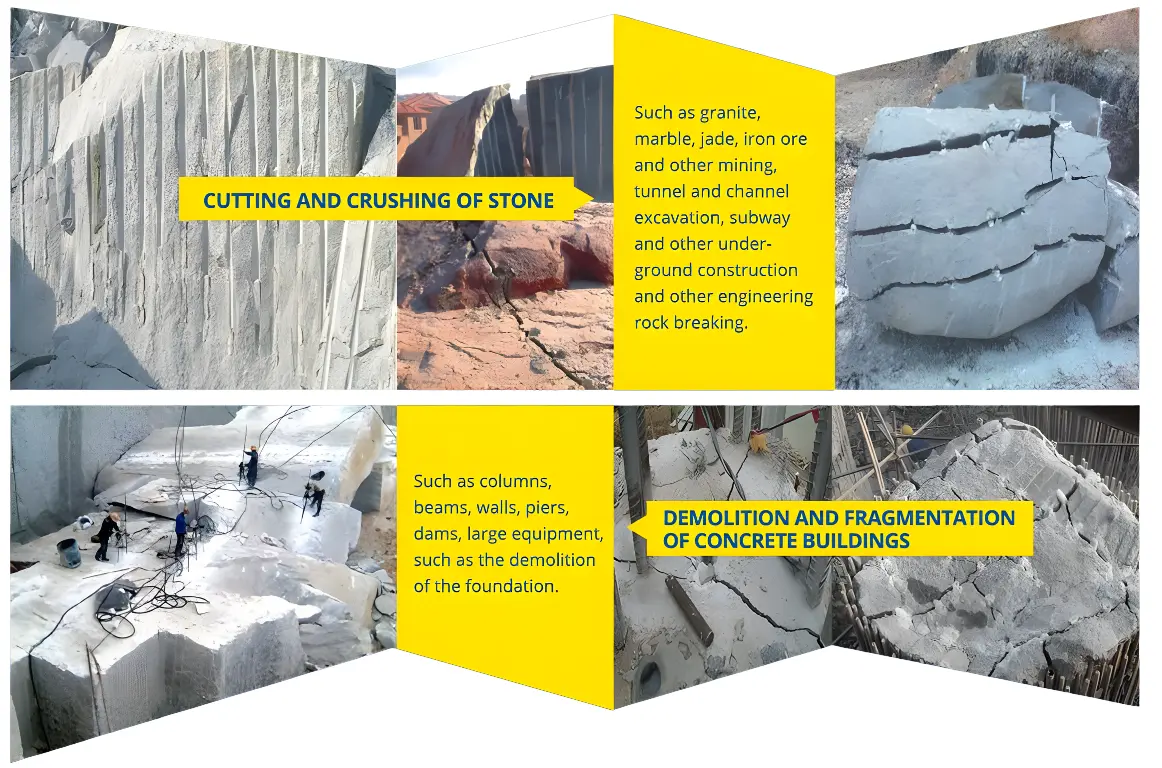
A: Yes. HSCA-1 generates 120–130MPa expansion pressure — well above reinforced concrete tensile strength of 2–5MPa. For summer concrete demolition, reduce borehole spacing to 25–35cm (versus 30–50cm in rock) to account for rebar interference with crack propagation. Pre-dawn filling protocol applies equally to concrete demolition in hot climates. Zero blast overpressure, zero flyrock, zero vibration — suitable for urban demolition near occupied structures.
Q: How Long Does HSCA-1 Take to Crack Rock in Summer Temperatures?
A: At 25°C–35°C ambient, crack initiation typically occurs within 2–5 hours. Above 35°C, the reaction accelerates — visible cracks may appear in 1.5–3 hours with standard protocol. Using pre-dawn filling and chilled mixing water maintains the standard working window. Maximum expansion pressure of 120–130MPa is typically reached within 6–12 hours regardless of ambient temperature.
Q: How Much HSCA-1 Is Needed Per Cubic Metre of Granite?
A: Typically 12–20kg per cubic metre for granite, depending on borehole diameter and spacing. At 38mm diameter with 35cm spacing, approximately 15kg per cubic metre is typical for medium-hard granite. Hard granite formations require tighter spacing (30–35cm) and higher product volume per square metre of bench face. Use our HSCA dosage calculator for project-specific quantity estimates.
Q: Do I Need a Blasting Permit to Use HSCA-1?
A: No. HSCA-1 is classified as a non-hazardous construction chemical — not an explosive — in all major international regulatory frameworks including Saudi Arabia, UAE, India, and GCC countries. No blasting licence, no explosives storage magazine, no specialist freight documentation required. This significantly reduces regulatory complexity and project cost in markets where blasting permits are difficult to obtain or restricted in urban areas.
Q: How Do You Ship HSCA-1 to Saudi Arabia or India?
A: HSCA-1 ships as standard non-hazardous construction chemical cargo — standard container shipment, no specialist hazmat freight. Moisture-proof sealed 20kg cartons or 1-tonne FIBC bulk bags. Standard import documentation: commercial invoice, packing list, certificate of origin, MSDS. For GCC ports including Jeddah, Dubai, and Muscat, EXPANDAG provides full export documentation support. Critical: arrange covered climate-controlled storage at destination — Gulf summer warehouse temperatures can reach 55–60°C, degrading product within weeks if stored uncovered.
Q: How Should HSCA-1 Be Stored in Tropical Humidity?
A: Store in dry, covered facility below 40°C. Moisture-proof sealed cartons protect the powder during shipping and storage — but once a carton is opened, use the powder within the same working day. CaO begins pre-hydrating on atmospheric moisture contact; partially used bags should not be resealed and stored. Shelf life is 12 months in intact sealed packaging from manufacture date.
Q: What Is the Difference Between HSCA-1 and Standard Expansive Mortar?
A: HSCA-1 and HSCA-2 standard grade generate identical 120–130MPa expansion pressure. The difference is in reaction rate control: HSCA-2 standard grade accelerates beyond safe working parameters above 25°C, producing blowout risk in hot weather. HSCA-1 incorporates retardant chemistry that maintains a controlled 4–6 hour working window at 25°C–40°C. Using HSCA-2 in Middle East summer conditions is the primary cause of hot-weather blowout incidents. Using HSCA-1 in the correct temperature range with correct protocol eliminates this risk.
Q: How to Prevent HSCA Blowout in Hot Weather Quarry Operations?
A: Four controls applied simultaneously: specify HSCA-1 (not HSCA-2) for ambient above 25°C; complete filling before 07:15 AM; use chilled mixing water below 15°C verified by thermometer; reduce borehole diameter to 30–33mm above 35°C ambient. Cap boreholes immediately after drilling to prevent solar heat loading of borehole walls. Maximum 4–6 holes per batch. Hard stop on filling session regardless of holes remaining. See our full HSCA blowout prevention guide for complete protocol.
Need solutions for cold weather operations? See HSCA-3 Winter Grade (-5°C to 10°C). For standard operations, see EXPANDAG HSCA complete range.