 EN
EN
 AR
AR

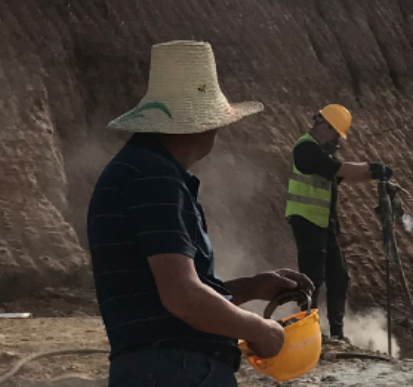
At a granite quarry outside Riyadh, Saudi Arabia, a contractor filled boreholes with standard HSCA at 11:00 AM. Ambient temperature: 39°C. Borehole temperature after drilling: over 40°C. Within 40 minutes, several holes discharged slurry under pressure — a textbook blowout event. No cracks formed. The material was wasted, the site halted, and a crew member standing nearby sustained minor injuries from the ejected paste. The product used was not defective. The grade was wrong for the conditions. High temperature does not just slow or accelerate expansive mortar — it fundamentally changes the reaction behavior, the expansion profile, and the safety risk. Every quarry and demolition contractor working in hot climates must understand this before loading a single borehole.
Direct Answer
Yes, high temperature significantly affects expansive mortar (HSCA) performance. HSCA operates through calcium oxide (CaO) hydration, generating 120–130 MPa of expansion pressure inside drilled boreholes. When ambient or borehole temperatures exceed 35°C, the hydration reaction accelerates beyond the designed rate: slurry temperature rises rapidly, steam pressure builds inside the borehole, and the material may discharge violently before expansion pressure transfers to the surrounding rock — a condition known as blowout. We offer three standard HSCA grades for different temperature ranges: HSCA-1 for 25°C–40°C, HSCA-2 for 10°C–25°C, and HSCA-3 for -5°C–10°C. Borehole temperature, not just ambient air temperature, governs grade selection. In desert or tropical quarrying, contractors must also use chilled mixing water (8°C–15°C), fill boreholes during early-morning hours (before 8:00 AM), and cap boreholes after filling to manage heat exposure.
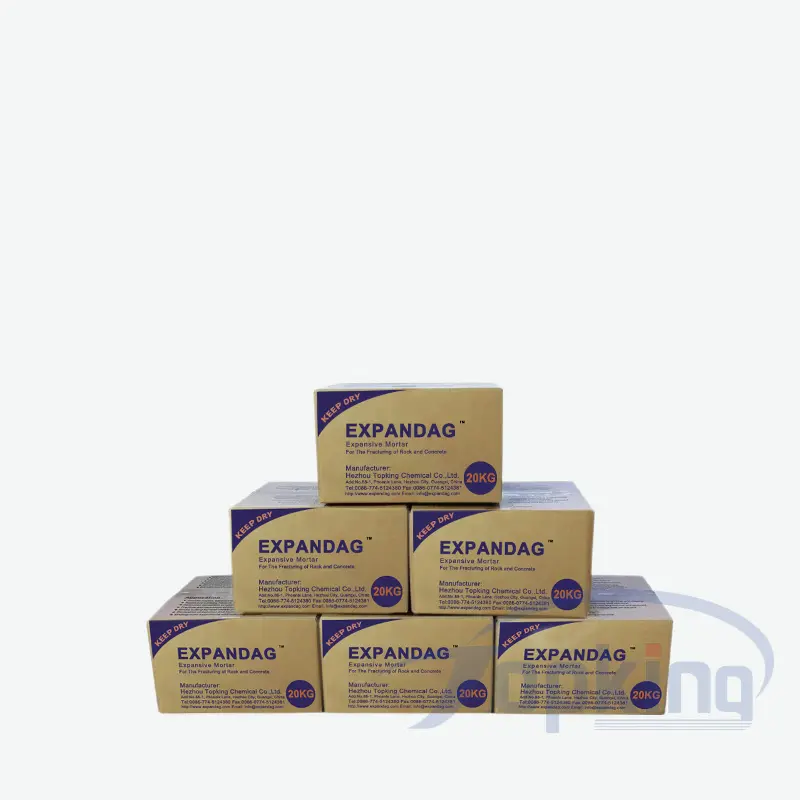
HSCA Grade Selection by Temperature: Technical Reference Table
HSCA is manufactured in three temperature grades precisely because ambient and borehole conditions control hydration kinetics. Using the wrong grade in hot weather is the single most common cause of blowout incidents in Middle East and tropical quarry projects. The table below covers the full operational envelope of each grade.
| HSCA Grade | Ambient Temp Range | Borehole Temp Limit | Crack Initiation Time | Blowout Risk if Misused | Typical Application |
|---|---|---|---|---|---|
| HSCA-3 | -5°C – 10°C | < 15°C | 6–12 hours | High if used above 15°C | Winter / cold-climate quarrying |
| HSCA-2 | 10°C – 25°C | < 30°C | 4–8 hours | Moderate if used above 30°C | Spring / autumn / temperate regions |
| HSCA-1 | 25°C – 40°C | < 40°C | 6–10 hours | Low if protocol followed | Desert quarrying, tropical climates, Middle East summer, North Africa |
Expansion pressure output (120–130 MPa) remains constant across all three grades when the correct grade is matched to site conditions. Grade selection affects reaction timing and blowout safety — not fracture performance.
How Does High Temperature Affect Expansive Mortar Chemically?
High ambient temperature accelerates the hydration of calcium oxide (CaO) in HSCA, compressing the reaction timeline and generating internal heat faster than the borehole can dissipate it. When slurry temperature inside the borehole rises above the product's thermal threshold, steam pressure builds before crystalline expansion pressure has time to transfer mechanically to the rock face — causing blowout rather than cracking.
At the chemical level, CaO + H₂O → Ca(OH)₂ is an exothermic reaction. Under standard conditions (10°C–25°C ambient with HSCA-2), this reaction proceeds over 4–8 hours, and the heat generated dissipates gradually into the surrounding rock. In high-temperature environments (25°C+ ambient using HSCA-1), two compounding factors accelerate this process beyond safe limits:
Elevated starting temperature: The slurry enters the borehole already warm, giving the reaction less thermal headroom before steam formation.
Hot borehole walls: Rock exposed to direct sun in desert environments can reach 50°C–60°C at the surface. Even at 30cm depth, borehole temperature may be 10°C–15°C above ambient air temperature.
Accelerated water-loss rate: High ambient heat causes rapid evaporation from the slurry surface before the borehole is sealed, altering the effective water-to-powder ratio and disrupting the expansion kinetics.
The result: a reaction that should unfold over 6–10 hours completes its exothermic phase in under 30 minutes — with nowhere for the steam to go except upward, through the borehole opening, carrying slurry with it.
What Is HSCA Blowout and Why Does It Happen in Hot Climates?
HSCA blowout is the forceful ejection of partially reacted slurry from a borehole, driven by steam pressure generated when internal slurry temperature exceeds approximately 80°C–90°C. Blowout produces no useful rock fracture and creates a serious safety hazard for personnel within 5–10 meters of the affected borehole. In high-temperature quarry environments, blowout is not a product defect — it is the predictable consequence of a wrong HSCA grade or mismatched operating protocol.
The mechanism follows a consistent sequence in desert conditions:
HSCA slurry is mixed and poured into a borehole where rock temperature is 40°C–45°C.
CaO hydration begins immediately at an accelerated rate due to elevated starting temperature.
Internal slurry temperature rises to 70°C–90°C within 20–45 minutes (versus 4–8 hours under standard conditions).
Steam pressure accumulates faster than crystalline expansion pressure can develop.
Steam ruptures the slurry plug at the borehole collar, ejecting hot paste under pressure.
No expansion pressure reaches the rock. The borehole is lost.
Blowout risk is highest between 10:00 AM and 3:00 PM in desert environments, when direct solar radiation has heated exposed rock surfaces to maximum temperature. Early-morning filling protocols (before 8:00 AM) are the most effective single mitigation measure available on-site without changing product grade.
What Is the Safe Temperature Range for Expansive Mortar Application?
We supply three fixed temperature grades:HSCA-3 (-5°C–10°C), HSCA-2 (10°C–25°C), HSCA-1 (25°C–40°C). For each 5°C increase above the product's rated range, reaction time compresses by approximately 30–40% and blowout probability increases significantly.
Contractors should measure borehole temperature, not ambient air temperature, as the primary control variable. Use a contact thermometer or infrared probe at borehole depth (not at the collar) before filling. If borehole temperature exceeds the product's rated maximum by more than 5°C, delay filling until conditions are within range — or upgrade to HSCA-1 for hotter conditions.
Field Insight from EXPANDAG Engineers
Scenario: UAE Limestone Quarry, August, 39°C Ambient
An EXPANDAG field consultant visiting a limestone quarry in the UAE observed crews using HSCA-2 at 9:30 AM with tap water at 28°C. Boreholes were filled by 10:15 AM. By 11:00 AM, four boreholes had blown out. Borehole temperature measured at 38cm depth was 38°C — far above HSCA-2’s upper limit of 25°C.
The corrective protocol implemented:
Switched to EXPANDAG HSCA-1 suitable for 25°C–40°C ambient
Sourced chilled water from an ice-cooled storage tank; mixing water temperature maintained at 10°C–12°C
Filling operations moved to 5:30 AM – 7:30 AM window, before direct solar heating of rock surface
Boreholes capped with damp burlap immediately after filling to reduce surface evaporation and direct solar heat input
Standoff exclusion zone maintained at 8 meters around filled boreholes for first 2 hours
Result: zero blowouts across the remainder of the project. Crack initiation achieved on schedule within 6–10 hours of filling, consistent with HSCA-1 specification.
Common field mistake EXPANDAG engineers see repeatedly: Contractors use one general grade all year without matching temperature. Hot summer days over 30°C always require HSCA-1; spring and autumn use HSCA-2; cold winter conditions rely on HSCA-3. Measure the borehole, not the air.
How Does Mixing Water Temperature Affect HSCA in Hot Weather?
Mixing water temperature is the fastest, most controllable variable available to contractors operating in high-temperature environments. Using chilled water (8°C–15°C) with HSCA-1 in desert conditions can reduce initial slurry temperature by 8°C–12°C compared to tap water, meaningfully extending the safe reaction window and reducing blowout risk.
The standard water-to-powder ratio for HSCA is 28–30% by weight (approximately 280–300 mL per 1 kg of powder). This ratio must not be increased to compensate for heat — adding excess water lowers final expansion pressure and can cause the slurry to become too fluid to remain in the borehole. In hot conditions, use the specified ratio but chill the water.
Practical chilled water methods for field sites:
Ice-water mixing tank: Add crushed ice to the mixing water reservoir until water reaches 10°C–15°C. Measure with a thermometer before mixing.
Pre-chilled sealed containers: Refrigerate water overnight in sealed 20L containers for use during early morning operations.
Shade storage: At minimum, store mixing water in shaded containers overnight — even unrefrigerated, shaded water may be 8°C–12°C cooler than ambient at dawn.
Does High Temperature Reduce Expansive Mortar Expansion Pressure?
When the correct HSCA grade is properly applied, expansion pressure is not reduced by ambient heat. All three grades (HSCA-1 / HSCA-2 / HSCA-3) deliver the same 120–130 MPa expansion pressure. The grade difference only controls hydration speed and reaction timing, not total expansion force.
However, if blowout occurs — even partial slurry ejection — the effective pressure delivered to the rock is reduced in proportion to the material lost. A borehole that partially blows out may generate enough residual pressure to initiate cracking in the upper section of rock but fail to fracture deeper zones. This creates irregular crack planes, increased secondary drilling requirements, and inconsistent block sizing — all of which increase project cost.
The practical rule: prevent blowout entirely. A borehole using matched HSCA grade delivers full 120–130 MPa over its designed time frame, producing better, more predictable fracture geometry than a mismatched grade reacting too fast.
Troubleshooting: High-Temperature HSCA Failures and Corrective Actions
| Problem | Likely Cause | Recommended Corrective Action |
|---|---|---|
| Blowout within 30–60 minutes of filling | Used HSCA-2 instead of HSCA-1 in hot weather; slurry overheated during rapid hydration | Upgrade to HSCA-1 for 25°C+; use chilled mixing water; fill before 8:00 AM; measure borehole temp before filling |
| No cracking after 24 hours (HSCA-1 in cool conditions) | HSCA-1 used below its rated temperature range; retarder over-suppresses reaction | Confirm ambient/borehole temp; if below 25°C, switch to HSCA-2; wait up to 36 hours before concluding failure |
| Slurry too stiff to pour into borehole | Mixing water temperature too low (below 5°C); or partial pre-reaction from moisture storage | Use mixing water between 8°C–15°C; inspect powder bags for clumping or moisture; discard hardened material |
| Incomplete cracking — upper rock breaks, lower zone intact | Partial blowout reduced material in lower borehole zone; or borehole spacing too wide | Use correct HSCA grade to avoid blowout; verify borehole spacing 300–600mm according to rock type |
| Excessive slurry runout after filling | Water ratio too high (above 30%); borehole diameter oversized | Maintain 28–30% water ratio; use 30–42mm borehole; fill in stages if oversize |
| Blowout occurs at 8:00 AM despite early filling | Rock stored residual heat from previous day; borehole temp still too high for HSCA-2 | Measure borehole temperature at dawn; use HSCA-1 for any ambient over 25°C |
Regional Application: HSCA in Middle East and Desert Quarry Environments
Desert quarrying in Saudi Arabia, UAE, Oman, and Qatar presents high thermal conditions for HSCA application. Summer ambient temperatures routinely reach 38°C–40°C, and direct solar radiation can lift rock surface temperature much higher. For all ambient conditions above 25°C, HSCA-1 is the correct choice. Normal spring and autumn weather uses HSCA-2, and cold winter environments rely on HSCA-3.
Key operational adjustments for Arabian Peninsula and North African desert quarries:
Shift operations to pre-dawn windows: In peak summer, fill between 4:00 AM – 7:00 AM to avoid peak rock heat.
Shade active work areas: Tarpaulin shade can lower rock and borehole temperature significantly.
Flush boreholes before filling: Cool down hot holes with clean water, let drain fully before pouring HSCA.
Increase standoff exclusion zone: Keep 5–10 meter safe distance for first 2 hours after filling in hot weather.
Sub-Saharan African quarry operations face similar hot dry and hot humid seasons. Always match the HSCA grade strictly to ambient temperature: above 25°C use HSCA-1, moderate 10–25°C use HSCA-2, cold below 10°C use HSCA-3.
Quick Technical Summary
Expansion pressure: 120–130 MPa (same for all HSCA grades)
HSCA-1: 25°C – 40°C ambient, for summer / desert / tropical use
HSCA-2: 10°C – 25°C ambient, for spring and autumn mild weather
HSCA-3: -5°C – 10°C ambient, for cold winter conditions
Water-to-powder ratio: 28–30% by weight — do not increase for heat
Mixing water temp hot climate: 8°C–15°C chilled water recommended
Borehole diameter: 30–42mm standard
Blowout threshold: Slurry temperature over 80°C–90°C triggers steam ejection
Safe filling window desert: Before 8:00 AM in hot summer
Safe exclusion zone: 5–10 meters for first 2 hours after filling
HSCA Hot Weather & Expansive Mortar Performance FAQ
Can I use standard HSCA-2 in 30-degree heat if I fill early morning?
No. Early filling reduces risk but cannot replace correct grade selection. Once ambient temperatures consistently exceed 25°C, HSCA-1 becomes the safer and recommended option regardless of filling time.
How much does high temperature shorten HSCA reaction time?
Every 10°C rise above rated range can cut reaction time by 30–50%. HSCA-1 is formulated to keep a safe 6–10 hour working window even at 25–40°C ambient, avoiding fast steam build-up and blowout.
Is HSCA blowout dangerous, and what safety precautions should contractors take?
Yes, ejected hot caustic slurry can cause burns and eye injury. Keep 5–10m exclusion zone, wear splash goggles and gloves, never look directly into freshly filled boreholes.
Does humidity affect HSCA performance in tropical hot climates?
Yes. High humidity can cause pre-hydration during storage. Keep HSCA sealed and dry in humid regions. In dry desert areas, focus on shading and temperature grade matching instead.
What is HSCA-1 used for?
HSCA-1 is our high-temperature grade for 25°C to 40°C ambient, ideal for Middle East summer, African dry seasons, and tropical quarry work. It delivers the same 120–130MPa expansion pressure with controlled reaction speed to prevent blowout in hot conditions.
Final Engineering Verdict
High temperature is one of the most critical variables in HSCA application. We supply three clear temperature grades: HSCA-1 for hot 25–40°C conditions, HSCA-2 for mild 10–25°C, and HSCA-3 for cold -5–10°C. The product pressure performance stays the same across all grades — only the reaction speed is adjusted for temperature. Blowouts almost always happen simply from using the wrong grade for the weather. Match HSCA-1 / HSCA-2 / HSCA-3 strictly to ambient and borehole temperature, use chilled water, fill early, and you will keep blowouts under control in any climate.