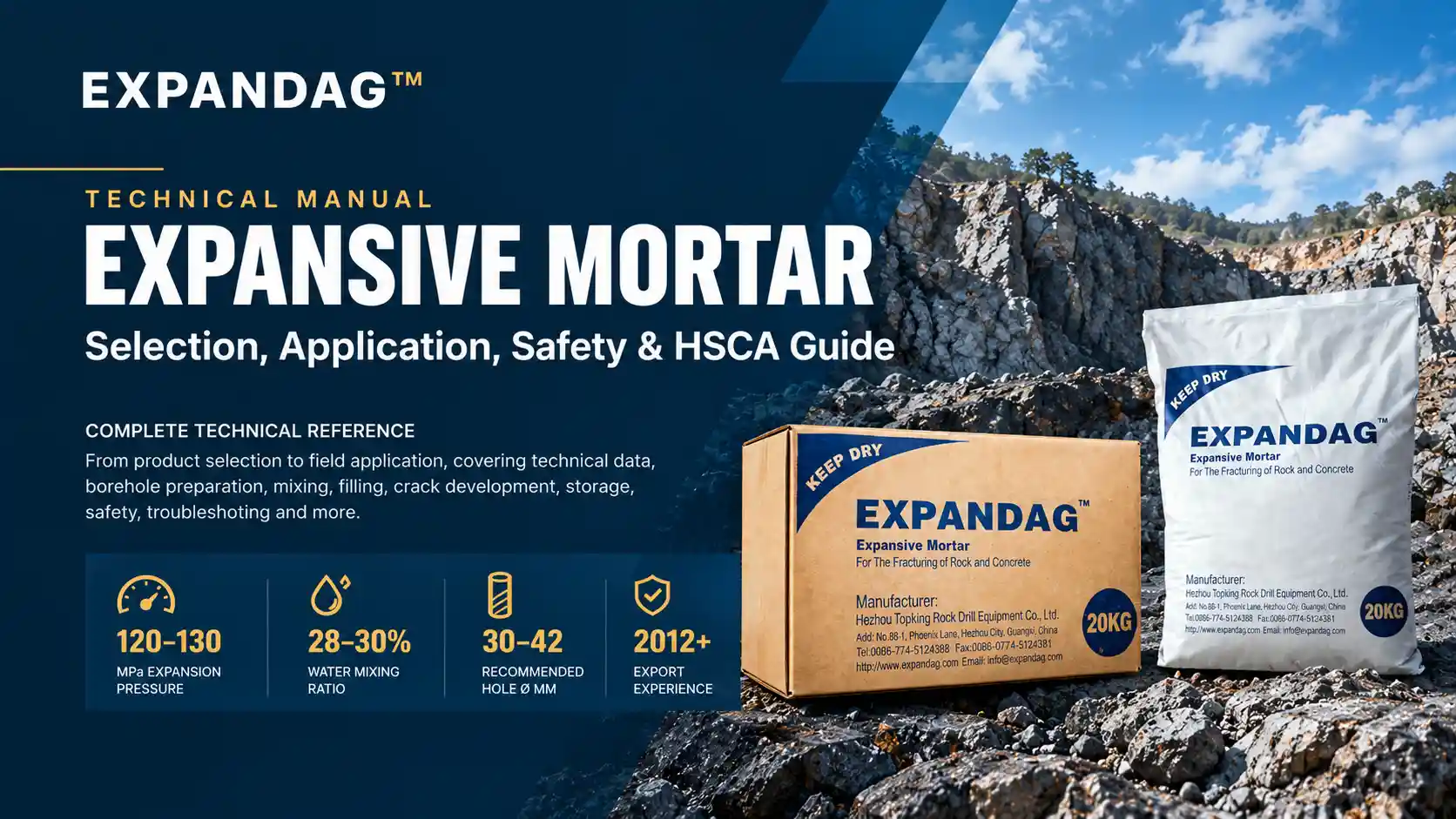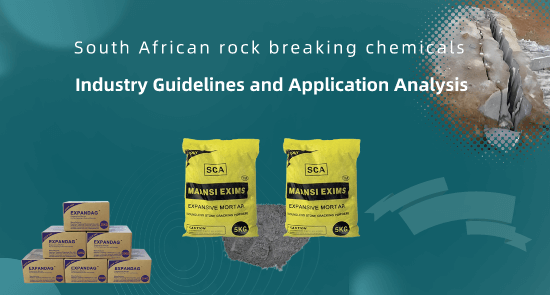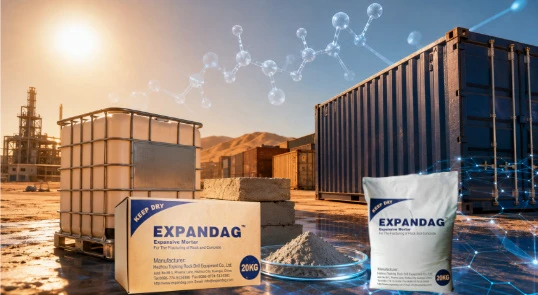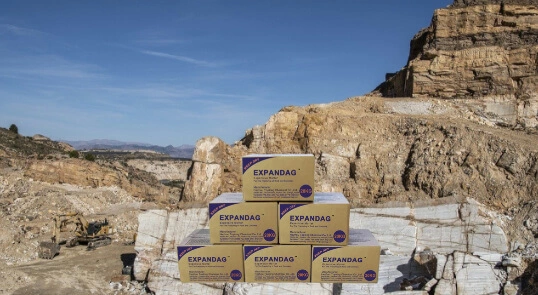
Expansive Mortar_Non-Explosive Demolition Agent-banner
SERVICES
FAQ

QWhy Do You Manufacture Expansive Mortar and Also Supply Rock Drilling Equipment?

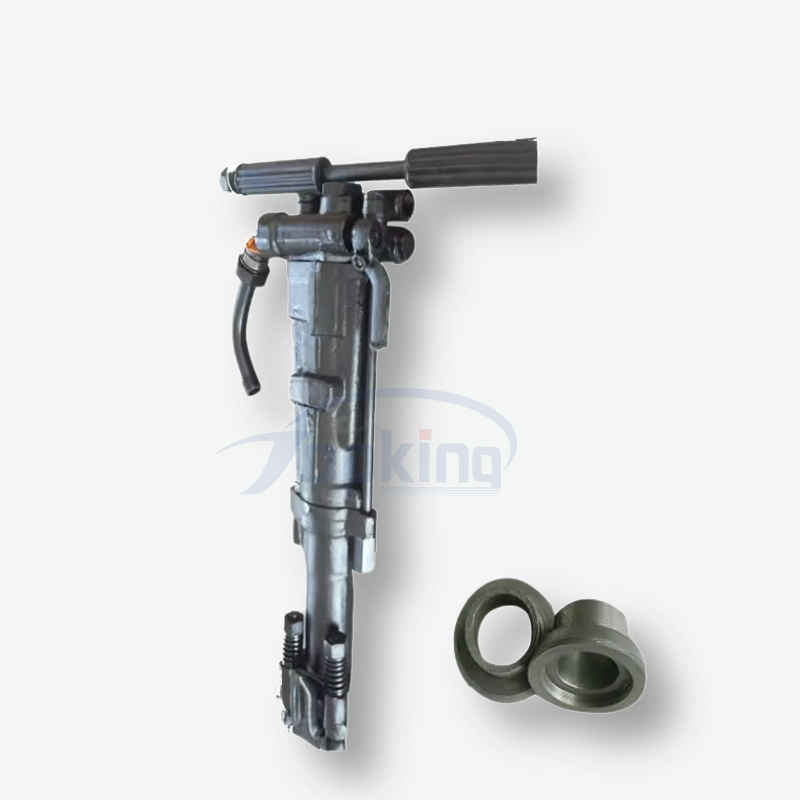
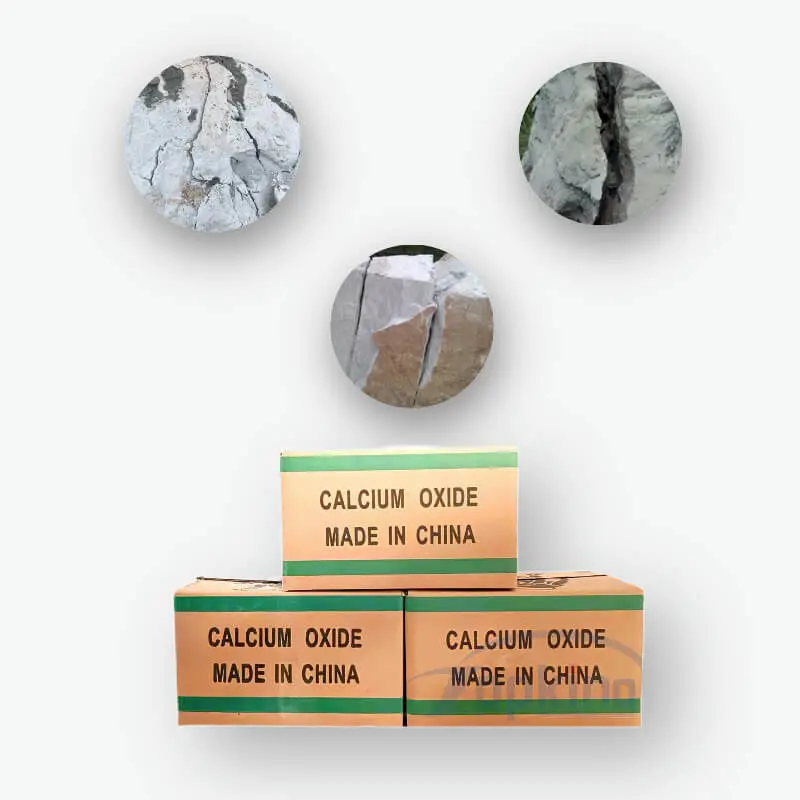
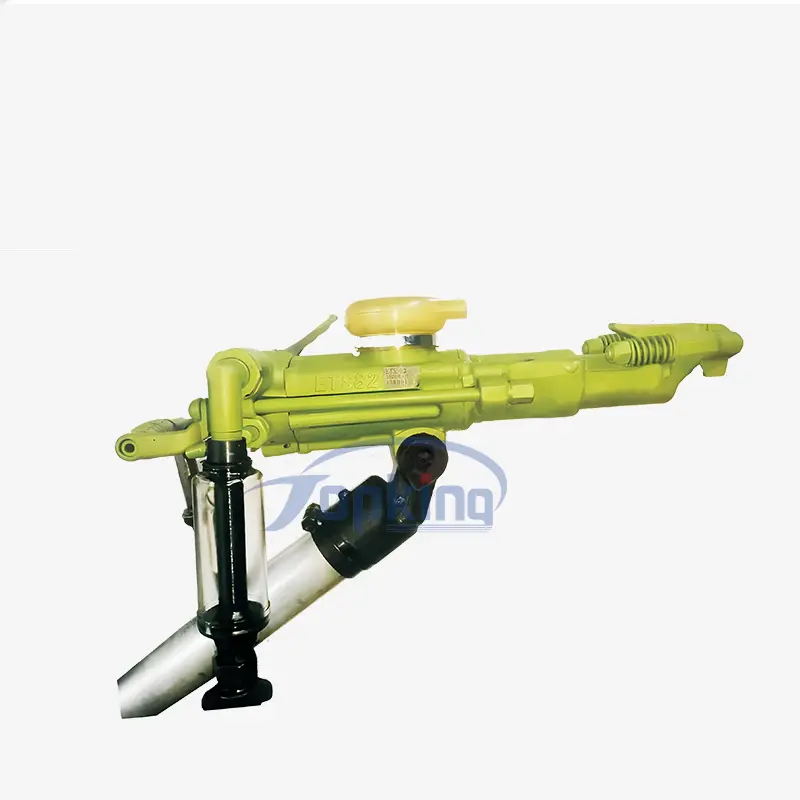
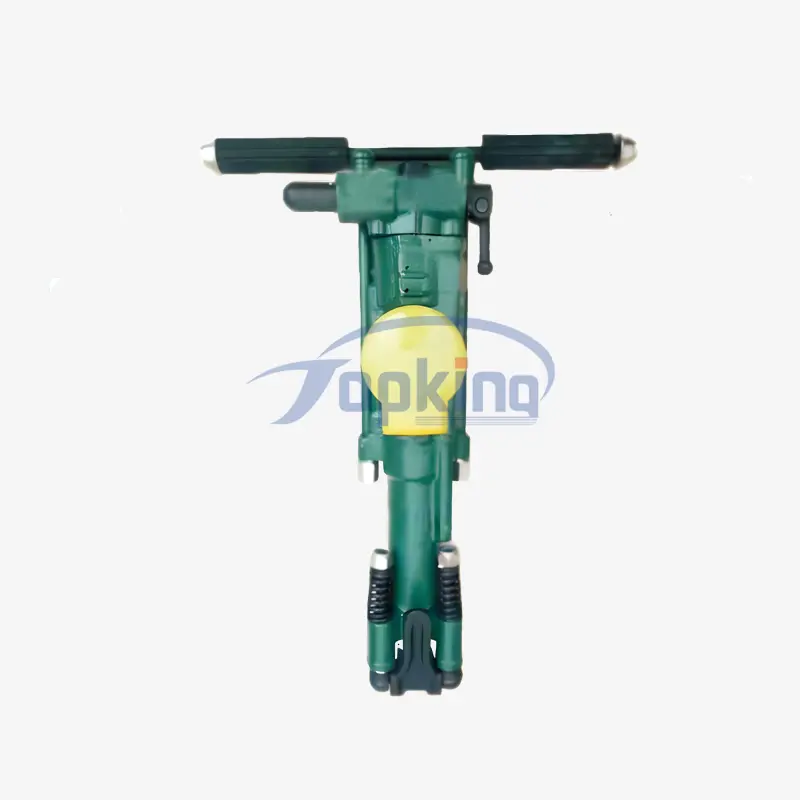
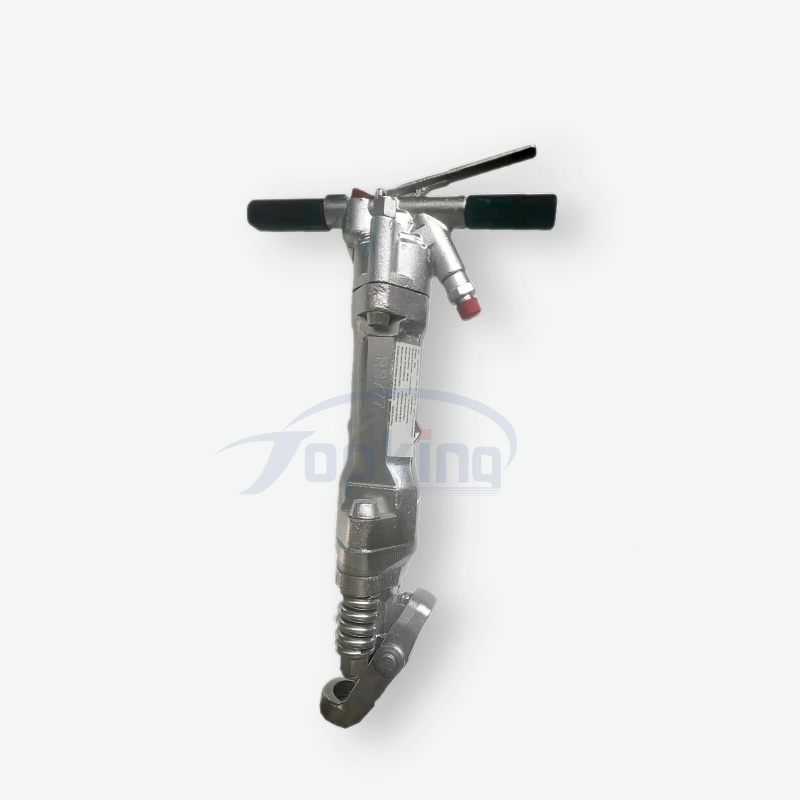
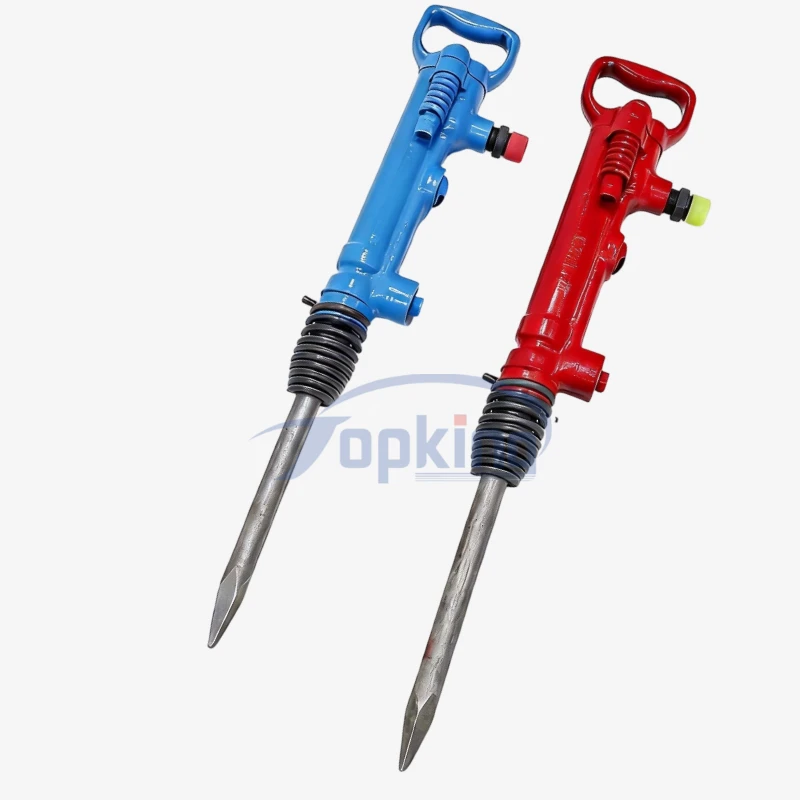
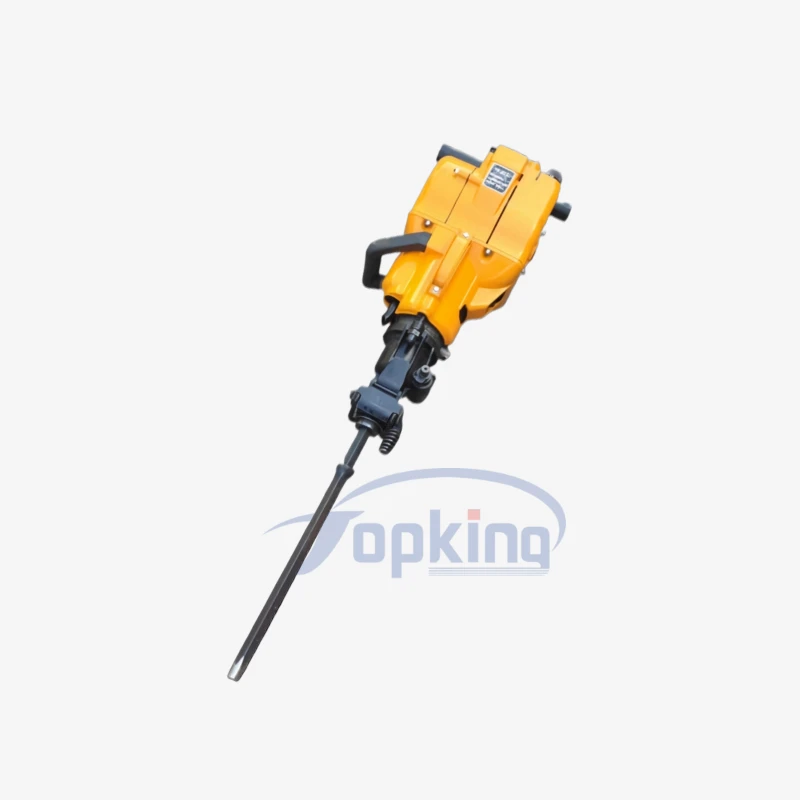
A We provide a complete “one-stop solution” for mining, quarrying, and demolition projects. In practical rock breaking operations, drilling and cracking are closely connected processes.Before expansive mortar (HSCA) can split rock, drilling holes with reliable rock drilling equipment is required. By supplying both EXPANDAG™ Expansive Mortar and pneumatic rock drills such as the widely used YT28 and YT24 models, we help customers obtain a fully compatible rock breaking system from a single manufacturer.This integrated approach allows contractors and quarry operators to reduce procurement time, lower international freight costs, and ensure optimal compatibility between drilling tools and cracking materials.Our engineering team has extensive experience supporting mining, quarrying, stone processing, and concrete demolition projects worldwide. By combining rock drilling equipment with high-range expansive mortar (HSCA), we help clients achieve efficient, safe, and controlled rock splitting without explosives.All products are manufactured under strict quality control standards, and we provide reliable technical support and after-sales service to protect our partners’ interests.

QWhat Is the Shelf Life of HSCA (Soundless Cracking Agent)?

A HSCA (soundless cracking agent), also known as expansive mortar or stone cracking powder, typically has a shelf life of about 12 months when stored under proper conditions.To maintain its performance, the material should be kept in sealed moisture-proof packaging and stored in a cool, dry environment away from humidity and water.If the product absorbs moisture during storage, it may start reacting prematurely and reduce the expansion pressure required for effective rock splitting.Under correct storage conditions, HSCA can maintain stable chemical properties and reliable cracking performance for quarrying, mining, and demolition projects.

QWhat Temperature Conditions Are Suitable for HSCA (Soundless Cracking Agent)?

A HSCA (soundless cracking agent), also widely known as expansive mortar, stone cracking powder, or non-explosive demolition agent, performs best within a specific temperature range.The recommended ambient temperature for using HSCA is typically between 5°C and 40°C. Within this range, the hydration reaction can generate stable expansion pressure for effective rock splitting.If the temperature is too low, the chemical reaction may slow down and delay the cracking process. In very hot environments, the reaction may occur faster, which can shorten the working time during mixing and filling.For projects in extreme climates, different formulations of soundless cracking agent are usually selected to match winter or summer conditions and ensure reliable cracking performance.

QIs Soundless Cracking Agent Safer Than Explosives for Rock Breaking?

A Yes. HSCA (soundless cracking agent), also known as expansive mortar or non-explosive demolition agent, is significantly safer than traditional blasting methods.Unlike explosives, HSCA does not produce shock waves, flying debris, vibration, or loud noise. This makes it suitable for use in areas where blasting is restricted, such as urban construction sites, tunnels, foundations, and sensitive quarry environments.Because the cracking process happens gradually through expansion pressure inside drilled holes, operators can maintain better control over the splitting direction and safety conditions.For these reasons, soundless cracking agents are widely used in quarrying, mining, and controlled demolition projects where safety and environmental protection are critical.

QWhat Hole Spacing Is Recommended for HSCA Rock Splitting?

A The recommended hole spacing for HSCA (soundless cracking agent) depends on the rock hardness, hole diameter, and desired cracking direction.In most quarrying and demolition applications, the typical spacing between drilled holes is usually 30 cm to 60 cm. For very hard rock such as granite or basalt, the spacing may be reduced to ensure efficient cracking.Proper drilling patterns are important when using expansive mortar. Holes should normally be drilled in a straight line along the intended splitting direction.Using reliable pneumatic rock drills, drill rods, and drill bits helps achieve accurate hole spacing and depth, ensuring the best rock splitting performance.

QHow Does HSCA (Soundless Cracking Agent) Work?

A HSCA (soundless cracking agent), also known as expansive mortar or non-explosive demolition agent, works by generating extremely high expansion pressure inside drilled holes.After the powder is mixed with water and poured into pre-drilled holes in rock or concrete, a hydration reaction occurs. This reaction produces strong expansion pressure that can exceed 120 MPa.The expansion pressure gradually builds inside the drilled holes and creates internal stress within the rock or concrete structure. As the pressure increases, controlled cracks begin to form and the material splits along the drilling line.Because this process does not involve explosives, HSCA provides a safe, vibration-free, and environmentally friendly method for breaking hard rock and reinforced concrete in quarrying, mining, and demolition projects.

QWhat Types of Rock Can HSCA (Soundless Cracking Agent) Break?

A HSCA (soundless cracking agent), also known as expansive mortar or non-explosive demolition agent, can break many types of rock and concrete without blasting.It is commonly used to crack hard materials such as granite, basalt, marble, limestone, sandstone, and reinforced concrete.This technology is widely applied in quarrying, mining, concrete demolition, trench excavation, and stone block cutting, where traditional blasting may be restricted due to safety or environmental concerns.Because HSCA generates extremely high expansion pressure inside drilled holes, it can effectively split even very hard rock formations when proper drilling patterns and hole spacing are used.

QHow Long Does HSCA Take to Crack Rock?

A The cracking time of HSCA (soundless cracking agent) depends on several factors such as rock hardness, hole diameter, temperature, and the type of expansive mortar used.Under normal conditions, visible cracking usually begins within 2 to 24 hours after the HSCA mixture is poured into drilled holes.For medium-hard rock or concrete, cracking typically starts within 8 to 12 hours. In extremely hard rock such as granite or basalt, the cracking process may take slightly longer.Proper drilling patterns, hole diameter, and correct mixing ratios help ensure maximum expansion pressure and efficient rock splitting when using soundless cracking agents.

QWhat Hole Diameter Is Required for HSCA Rock Splitting?

A The hole diameter required for HSCA (soundless cracking agent) depends on the rock type and the drilling equipment used.For most quarrying and demolition projects, the recommended hole diameter is typically 32mm to 45mm. These holes are usually drilled using pneumatic rock drills such as YT28 air-leg rock drills or hand-held rock drills.Drilling tools such as tapered drill rods and button drill bits are commonly used to achieve the correct hole diameter and depth before filling the expansive mortar.Proper hole spacing and diameter are important to ensure maximum expansion pressure and efficient rock cracking when using HSCA.

QWhat Is HSCA (Soundless Cracking Agent)?

A HSCA (Soundless Cracking Agent) is a non-explosive demolition material used for controlled rock and concrete breaking.It is also commonly known as expansive mortar or non-explosive demolition agent. When mixed with water and poured into drilled holes, HSCA generates extremely high expansion pressure that gradually cracks rock or reinforced concrete without vibration, noise, or flying debris.Because it does not involve explosives, HSCA is widely used in projects where blasting is restricted or unsafe. Typical applications include quarrying, mining, concrete demolition, trench excavation, and stone block cutting.This technology allows contractors and engineers to break hard rock such as granite, basalt, and reinforced concrete in a safer and more controlled way compared to traditional blasting methods.
News
XML

Copyright (C) Since 2025 Hezhou Topking Rock Drill Equipment Co., Ltd.

WhatsApp

+86 18978406522