 EN
EN
 AR
AR
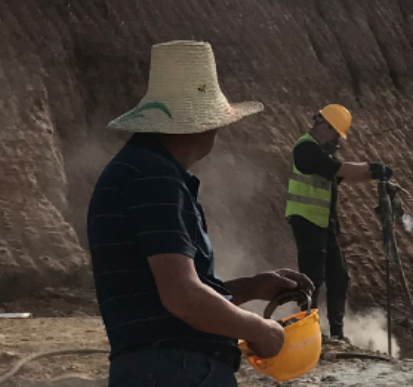
A marble quarry operator in Colombia recently asked EXPANDAG's team a straightforward question that turned out to have a less straightforward answer: "Which of your three hand-held drills should I order?" On paper, TY24C and Y24 look almost identical — same length, same cylinder bore, same working pressure. Y26 looks like a heavier, pricier version of the same machine. None of that is quite right, and the difference matters once the drill is actually cutting rock on-site instead of sitting in a spec sheet.
Direct Answer
TY24C and Y24 are both 24kg dry-drilling hand-held rock drills with nearly identical core mechanics — 604mm length, 70mm cylinder diameter, 70mm piston stroke, and 0.4–0.63MPa working pressure — and the real choice between them comes down to build economy rather than raw performance. Y26 is the genuinely different machine: a 26kg drill with a smaller 65mm cylinder but a rated ≥30J impact energy, true wet-drilling capability (0.3–0.35MPa working water pressure through a dedicated water line), a larger 25mm shank, and a stated maximum drilling depth of 5m. For medium-hard to hard rock (f=8–18) where dust suppression or deeper holes matter, Y26 is the drill built for that job; TY24C and Y24 are built for lighter, dry, shallower drilling where economy matters more than water capability.
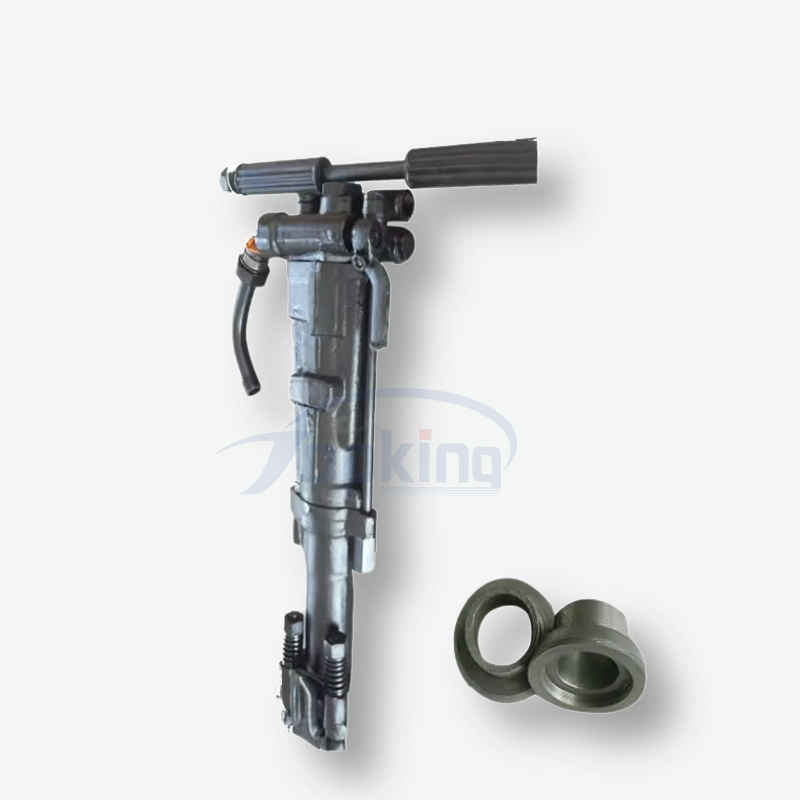
TY24C vs Y24 vs Y26: Full Technical Specification Comparison
All three specs below come from EXPANDAG's official product manuals. Rather than rounding numbers to make the comparison look cleaner, the table shows exactly where TY24C and Y24 genuinely overlap and where Y26 pulls ahead.
| Parameter | TY24C | Y24 | Y26 |
|---|---|---|---|
| Weight | ≈24 kg | ≈24 kg | 26 kg |
| Length / Dimensions | 604 mm | 604 mm | 650×534×125 mm |
| Cylinder diameter | 70 mm | 70 mm | 65 mm |
| Piston stroke | 70 mm | 70 mm | 70 mm |
| Working pressure | 0.4–0.63 MPa | 0.4–0.63 MPa | 0.4 MPa |
| Impact frequency | ≥27 Hz | ≥27 Hz | ≥23 Hz |
| Impact energy | — (not specified) | — (not specified) | ≥30 J |
| Air consumption | <50 L/s | ≤50 L/s | ≤47 L/s |
| Drilling mode | Dry | Dry (confirmed) | Dry or wet |
| Working water pressure | — | — | 0.3–0.35 MPa |
| Noise level | — (not specified) | — (not specified) | ≤124 dBA |
| Drill bit diameter | 34–42 mm | 34–42 mm | 34–42 mm |
| Max drilling depth | — (not specified) | — (not specified) | 5 m |
| Shank specification | 22×108+1 mm | 22×108±1 mm | 25×108 mm |
| Air hose inner diameter | ≥19 mm | φ19 mm | 19 mm |
| Lubricator | FY200B, 200ml | FY200B, 200ml | FY200 (optional/custom-order), 0.25L |
What Is the Real Difference Between TY24C and Y24?
Based on their official specifications, TY24C and Y24 are mechanically near-identical machines — same 604mm length, 70mm cylinder, 70mm stroke, 0.4–0.63MPa working pressure, ≥27Hz impact frequency, and the same FY200B lubricator. The Y24 manual explicitly confirms dry-drilling operation; TY24C's manual doesn't state drilling mode as explicitly but describes the same downward-blasthole application in medium-hard to hard rock (f=8–18). In practice, the choice between TY24C and Y24 comes down to positioning rather than performance: TY24C is marketed as the Toyo-style, economical option, while Y24 is positioned as the standard workhorse with alloy steel forgings and a four-bolt back head. Buyers comparing these two on spec sheets alone won't find a meaningful performance gap — the differentiators are build details and pricing, not drilling capability.
Why Does Y26 Have a Smaller Cylinder but Higher Rated Impact Energy?
Y26's 65mm cylinder is smaller than TY24C and Y24's 70mm bore, yet Y26 is rated for ≥30J impact energy against a drilling regime where TY24C and Y24 don't publish an impact energy figure at all. This isn't a contradiction — Y26 is a different mechanical design optimized specifically for wet blasthole drilling in quarrying, where dust suppression and hole depth matter more than raw cylinder size. The tradeoff shows up elsewhere: Y26's impact frequency (≥23Hz) is lower than TY24C/Y24's (≥27Hz), meaning Y26 delivers fewer, harder strikes per second rather than faster, lighter ones. For quarrying granite or marble ahead of an HSCA (Soundless Cracking Agent) pour, that harder-strike profile combined with wet drilling's dust control is generally the better match.
Dry Drilling vs. Wet Drilling: Which Do You Actually Need?
Dry drilling (TY24C, Y24) is simpler to set up — no water line, no water pressure to manage, no risk of water contaminating the compressed air system. It's the right choice for light construction, pavement work, and masonry where dust isn't a major site concern and drilling runs are shorter. Wet drilling (Y26) adds a dedicated water line at 0.3–0.35MPa specifically to suppress silica dust during drilling, which matters for two separate reasons: operator health (silicosis risk from prolonged dry-drilling dust exposure) and increasingly strict site dust regulations, particularly on quarry and mining sites where sustained drilling runs generate far more airborne dust than short demolition jobs.
Dry drilling is simpler and cheaper to run. Wet drilling exists specifically to control silica dust on sustained quarrying operations — it's a health and compliance decision as much as a performance one.
Drilling for HSCA (Soundless Cracking Agent): Which Drill Prepares the Right Hole?
All three drills — TY24C, Y24, and Y26 — produce the 34–42mm bit diameter that matches EXPANDAG's standard HSCA borehole range, so any of the three can prepare holes for a non-explosive rock-splitting pour. The practical difference comes down to the quarrying context: granite and marble quarrying with an HSCA finish typically favors Y26's wet-drilling dust control and 5m depth capability, since deeper, cleaner holes reduce the chance of debris interfering with HSCA slurry placement. TY24C and Y24 are still viable for HSCA hole prep on lighter jobs — smaller quarry faces, secondary breaking, or projects where dry drilling's simplicity outweighs the dust-control benefit. For the full HSCA pouring and mixing procedure once holes are drilled, see EXPANDAG's Expansive Mortar (HSCA) product page.
Field Insight from EXPANDAG Engineers
Buyers new to quarrying sometimes assume the heavier, wet-capable drill is simply the "better" machine and default to Y26 even for jobs that don't need it. That's not always the right call — running a wet-drilling machine dry, or setting up a water line for a job that doesn't generate meaningful dust, adds setup time and maintenance overhead with no real benefit. The better question isn't "which drill is stronger" but "does this job's dust, depth, and rock hardness actually call for wet drilling." For most light-to-medium quarry and construction work, TY24C or Y24 does the job at a lower total cost of ownership.
TY24C vs Y24 vs Y26: Model Selection Guide
| Application | Recommended Model | Reason |
|---|---|---|
| Light demolition, pavement breaking | TY24C or Y24 | Dry drilling simplicity, lower setup and maintenance overhead |
| Budget-conscious quarrying, standard shallow blastholes | TY24C | Economical Toyo-style build, same mechanical performance as Y24 |
| Standard-duty dry quarrying and masonry | Y24 | Standard workhorse build, alloy steel forgings, four-bolt back head |
| Granite/marble quarrying with dust regulation, deeper holes, HSCA prep | Y26 | Wet drilling dust suppression, ≥30J impact energy, 5m rated depth |
Quick Technical Summary
TY24C and Y24: both ≈24kg, 604mm, 70mm cylinder, 70mm stroke, 0.4–0.63MPa, ≥27Hz — mechanically near-identical, dry drilling
Y26: 26kg, 65mm cylinder, ≥30J impact energy, ≥23Hz, dry or wet drilling capability
Y26 working water pressure: 0.3–0.35MPa through a dedicated water line
Y26 rated max drilling depth: 5m (not specified for TY24C/Y24)
All three: 34–42mm drill bit diameter — matches EXPANDAG's standard HSCA borehole range
Shank size differs: TY24C/Y24 use 22mm shanks, Y26 uses a 25mm shank
TY24C vs Y24 vs Y26 FAQ
Q: Is There a Real Performance Difference Between TY24C and Y24?
Based on official specifications, no meaningful performance gap exists — both are ≈24kg dry-drilling machines with identical length, cylinder diameter, piston stroke, working pressure, and impact frequency. The difference is build positioning: TY24C is the economical Toyo-style option, Y24 is the standard workhorse build. Choose based on budget and preferred build style rather than expecting different drilling performance.
Q: Can Y26 Be Used for Dry Drilling, or Is It Wet-Only?
Y26 supports both dry and wet drilling. The dedicated water line and 0.3–0.35MPa working water pressure exist for dust suppression when needed, but the machine doesn't require water to operate. This makes Y26 more flexible than TY24C/Y24 for buyers who want wet-drilling capability available without committing to it on every job.
Q: Which Hand-Held Rock Drill Is Best for Granite Quarrying?
For granite quarrying — particularly where dust regulation applies or holes run deeper than typical demolition work — Y26 is the better fit due to its wet-drilling dust suppression, ≥30J impact energy, and rated 5m drilling depth. TY24C or Y24 remain viable for smaller quarry faces or secondary breaking where dry drilling's simplicity is preferred over wet-drilling dust control.
Q: What Drill Bit Diameter Do TY24C, Y24, and Y26 Use?
All three models use a 34–42mm drill bit diameter, which matches EXPANDAG's standard borehole range for HSCA (Soundless Cracking Agent) applications. This means any of the three hand-held drills can prepare boreholes for a non-explosive rock-splitting pour, regardless of which model is selected for the drilling work itself.
Q: Why Do Contractors in the Middle East and Africa Choose EXPANDAG's Hand-Held Rock Drills?
EXPANDAG supplies TY24C, Y24, and Y26 as factory-direct hand-held rock drills built for the same medium-hard to hard rock range (f=8–18) common across Middle East desert quarrying and African mining operations. Pairing these drills with EXPANDAG's own HSCA (Soundless Cracking Agent) gives contractors a complete drill-and-crack solution from a single factory-direct supplier, rather than sourcing drilling equipment and expansive mortar from separate vendors.
Final Engineering Verdict
TY24C and Y24 aren't really competing with each other on performance — they're the same drilling capability at two different build/price points, and the honest answer for most buyers is to pick whichever fits the budget. Y26 is the drill that actually changes the calculation: smaller cylinder, lower frequency, but genuine wet-drilling capability, higher rated impact energy, and a stated depth rating the other two don't publish. If the job is dust-sensitive, deep, or feeding into an HSCA quarrying workflow where clean, consistent boreholes matter, Y26 earns its higher weight and price. If it's lighter dry-drilling work, TY24C or Y24 gets it done without paying for capability the job doesn't need.
Request Technical Consultation