 EN
EN
 AR
AR

Granite Quarrying Methods & Technical Criteria: A Field Guide
💡 Key Takeaway: In dimension stone quarrying, success comes down to one metric: block yield. Extracting massive, crack-free granite blocks requires planning your working face around the rock's natural joints and substituting violent explosives with controlled methods like diamond wire saws and Soundless Cracking Agents.
In the initial stage of opening a granite quarry, site managers must clear the overburden (weathered rock and soil) and define the production scale. From there, the entire extraction process relies on three sequential phases: Separation, Cutting, and Trimming.
Phase 1: The Core Quarrying Process
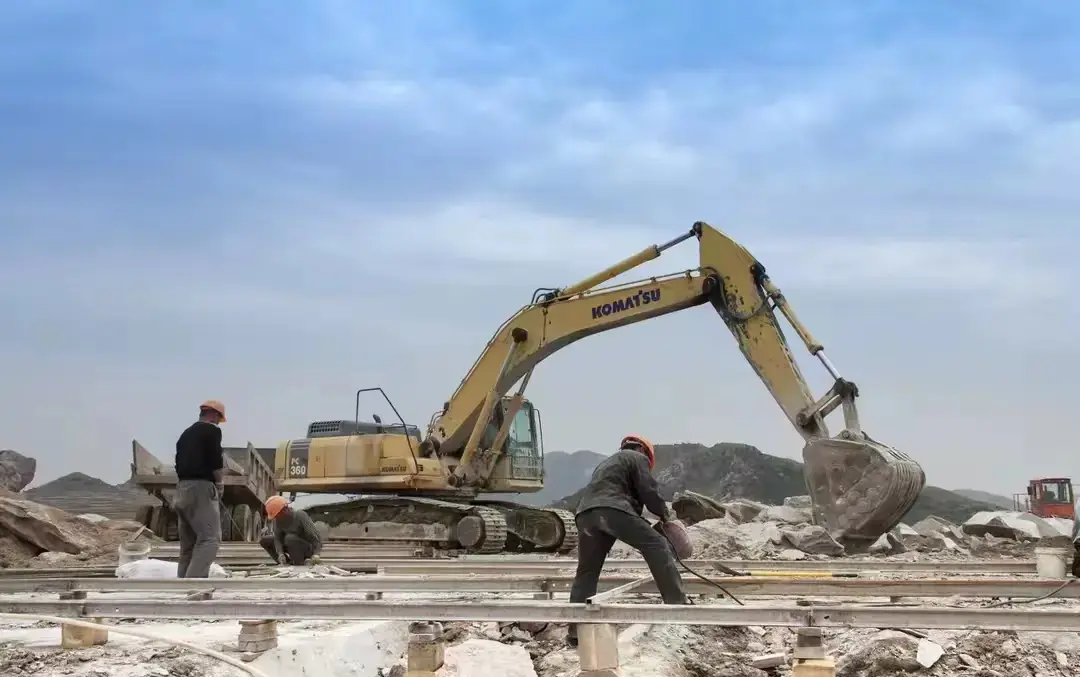
Separation: Detaching the primary rock mass from the bedrock. Modern quarries avoid dynamite here to prevent micro-fractures, relying instead on chemical agents or wire saws.
Cutting (Disintegration): Flipping the separated rock mass and cutting it down into commercial-sized dimensional blocks based on market specifications.
Trimming: Using mechanical squaring tools or hammers to remove excess edges, ensuring the granite block is perfectly flat and ready for transport to the polishing factory.
Top 4 Granite Mining Methods Used Globally
1. The "Drill & Crack" Method (Silent Blasting)
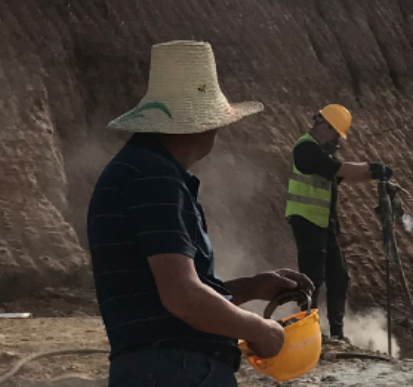
For quarries prioritizing block integrity over sheer speed, this is the safest and most widely used technique. Operators use a pneumatic Y24 Rock Drill to bore a linear hole pattern. The holes are then filled with Stone Cracking Powder (also known as Expansive Mortar or Non-Explosive Demolition Agent). As the chemical hydrates, it safely pushes the rock apart without damaging the internal crystal structure of the granite.
2. Diamond Wire Saw + Rock Drill Combination
This is the advanced standard for mechanized quarries. A diamond bead wire saw is threaded through intersecting vertical and horizontal holes (drilled by handheld or bench rock drills) to slice massive blocks out of the mountain smoothly.
3. Circular Saw & Wire Saw Hybrid
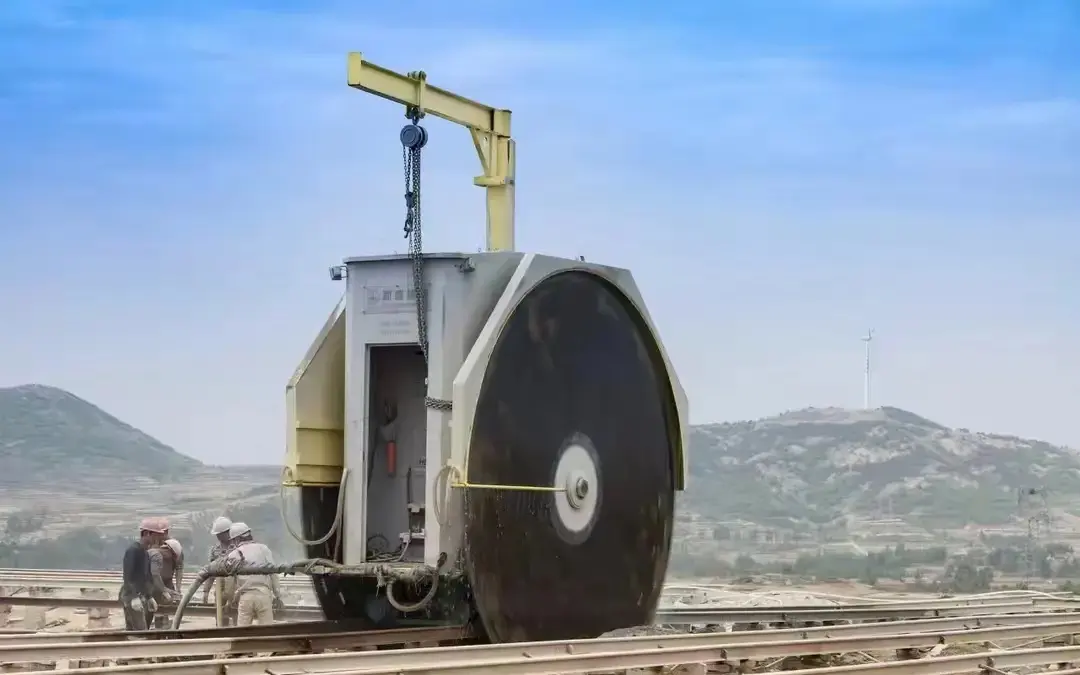
Common in small to medium-sized operations. The circular saw makes the primary vertical cuts into the quarry floor, while the wire saw handles the horizontal undercutting to free the block.
4. Flame Cutting (Thermal Spalling)
A traditional but still effective method for stones with high quartz content (like granite). A high-velocity flame heats the rock, causing it to spall and form a separation trench. It is highly effective but consumes significant fuel.
Technical Specifications: Quarry Bench Design
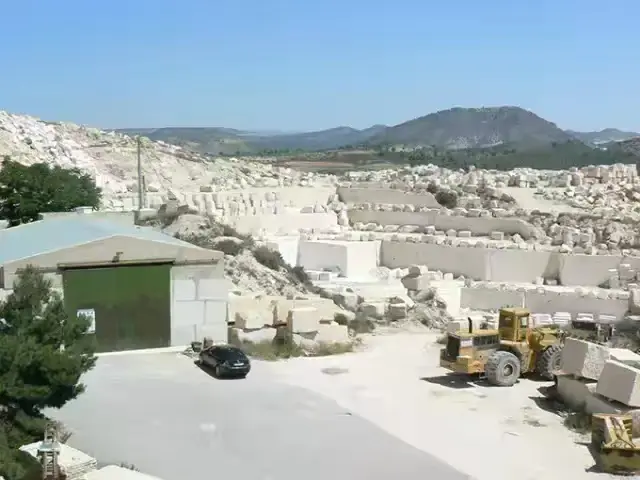
To ensure safety and maximize the economic block yield (which should ideally sit between 15% and 25%), quarry managers must adhere strictly to operational geometry. The stripping ratio should generally be kept around 0.3.
Bench Height: 4 to 6 meters when using mobile cranes. If utilizing mast cranes, heights can reach up to 14 meters (small mast) or 62 meters (large mast).
Bench Slope Angle: Usually kept at a strict 90° (vertical) to produce square blocks.
Strip Width: Generally between 1 to 3 meters, depending on natural fault lines and lifting equipment capacity.
Working Face Length: 5 to 15 meters for manual/chemical drilling; 15 to 20 meters for mechanized flame cutting.
Safety Platform Width: A minimum of 20 to 25 meters is required to safely operate heavy loaders and wire saws.
Granite Quarrying FAQs
Q1: Why is expansive mortar preferred over explosives in dimension stone mining?
A: Dynamite shockwaves create invisible micro-fractures deep inside the rock. These blocks often break later during the factory polishing process, resulting in massive financial losses. Expansive mortar generates static pressure, ensuring the block is extracted 100% intact, significantly increasing the quarry's block yield rate.
Q2: What is an acceptable block yield rate in a granite quarry?
A: A financially viable granite quarry should maintain a minimum commercial block yield rate between 15% and 25%. Proper bench planning and using non-destructive cutting methods (like wire saws and chemical agents) are key to maintaining this percentage.
Q3: What equipment is needed for the silent blasting separation method?
A: You need a reliable pneumatic rock drill (such as the Y24 or YT28) to drill straight, vertical holes. After drilling, the holes are filled with a specialized Non-Explosive Demolition Agent. No heavy machinery is required during the actual cracking phase.