 EN
EN
 AR
AR

The "Drill & Crack" System: Combining Rock Drills with Expansive Mortar
In modern quarrying and urban demolition, tearing down hard rock without triggering noise complaints or flying debris requires an integrated approach. The most successful contractors rely on the "Drill & Crack" system: pairing high-performance pneumatic rock drills with Stone Cracking Powder to achieve safe, non-explosive rock fragmentation.
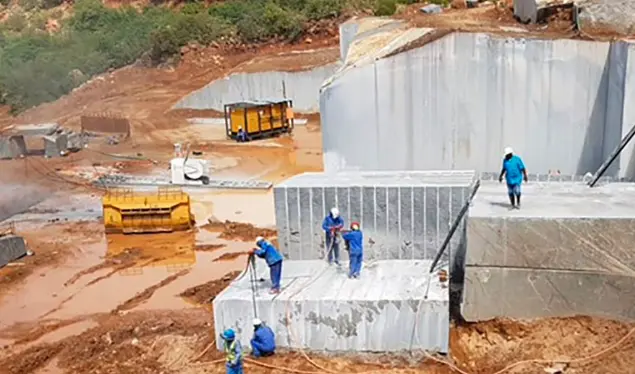
Step 1: Precision Drilling Sets the Foundation
The effectiveness of any chemical demolition agent relies heavily on the quality of the boreholes. If holes are crooked, too shallow, or inconsistently spaced, the expansive pressure will escape, resulting in poor fragmentation.
To create a perfect stress field, operators utilize heavy-duty rock drills equipped with premium tapered drill rods and tapered button bits. High-quality drilling tools ensure fast penetration through hard granite while maintaining a stable hole diameter (typically 34mm to 45mm). Clean, straight holes create the ideal chamber for the chemical reaction to take place.
Step 2: Silent Cracking with Expansive Mortar
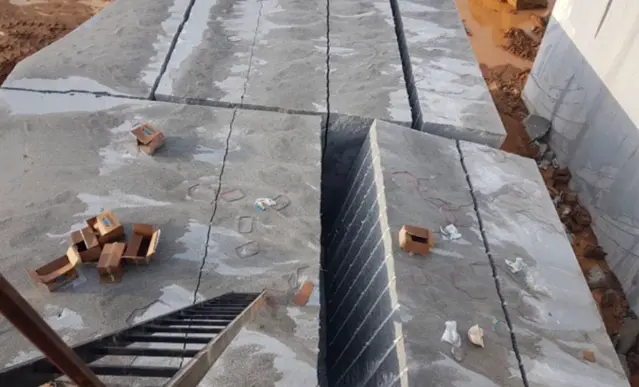
Once the drilling pattern is complete, the Expansive Mortar is mixed with water and poured into the holes. Unlike dynamite, this powder does not explode. Instead, it undergoes a controlled hydration process.
As the slurry crystallizes, it expands outward against the borehole walls, generating a massive internal stress of up to 120 MPa. This slow, deliberate pressure cleanly splits the stone along the predetermined drill lines. In dimension stone mining (marble and granite), this method drastically improves the block yield rate because it prevents the micro-fractures commonly caused by explosive shockwaves.
💡 Engineer's Advice: Calculate Before You Pour
A precise drilling pattern requires precise material estimation. To avoid wasting stone cracking powder or under-filling your boreholes, use our SCA Dosage Calculator to determine your exact project requirements.
Integrated Demolition FAQs
Q1: How do drilling tools affect the performance of stone cracking powder?
A: The borehole is the combustion chamber for the expansive mortar. If you use low-quality drill bits that create irregular or undersized holes, the chemical cannot build sufficient expansion pressure (up to 120 MPa), which leads to incomplete rock fracturing.
Q2: What is the optimal drill bit size for using Expansive Mortar?
A: We recommend using tapered button bits with a diameter between 38mm and 42mm. This size holds enough slurry to generate immense heat and expansion force while minimizing the risk of steam blow-outs.
Q3: Can I use the same pneumatic rock drill for drilling and secondary breaking?
A: Yes. High-quality pneumatic drills, such as the YT28 or YN27C, can be used to drill the initial holes for the cracking powder. For secondary clearing of the cracked rubble, you can easily switch to a pneumatic paving breaker (like the RB777).
Need a Complete Rock Breaking Solution?
Expandag supplies both the high-torque pneumatic rock drills and the high-range expansive mortar you need for your quarry. Contact us for a bundled wholesale quote.