 EN
EN
 AR
AR

Reinforced Concrete Demolition Guide: Using Static Cracking Agents in Urban Zones
Demolishing reinforced concrete foundations, beams, or pillars in modern urban sites is a major logistical challenge. Strict noise ordinances and dust control regulations often prohibit the use of heavy hydraulic breakers or explosives. In these sensitive environments, Static Cracking Agent (also technically known as Non-explosive Demolition Agent) provides the most efficient way to break high-strength concrete without damaging adjacent structures or underground pipelines.
Why Static Cracking Agents are Superior for Concrete Removal
Unlike percussive jackhammers, Expandag’s high-range formula utilizes expansive pressure (up to 120 MPa) to fracture concrete from within. This process ensures:
Vibration-Free Precision: Zero seismic shock, protecting historical foundations and utility lines.
Silent Operation: Ideal for night-time demolition near hospitals, schools, and high-density residential zones.
Efficient Rebar Separation: The concrete fractures into manageable chunks, leaving the internal rebar clean and easy to cut for recycling.
The Process: Controlled Reinforced Concrete Breaking
Step 1: Specialized Drilling Pattern
Reinforced concrete is highly resistant to tension due to the internal steel mesh. Success depends on a tighter borehole layout compared to standard rock mining.
| Concrete Type | Hole Dia. (mm) | Spacing (cm) | Equipment Needed |
|---|---|---|---|
| Standard Foundation | 38mm - 40mm | 25 - 35 cm | YT28 / Y24 Drill |
| Heavy Reinforced Beam | 40mm - 45mm | 15 - 25 cm | YT29A / high-torque bits |
We recommend using professional pneumatic rock drills paired with Q7 Tapered Button Bits. This combination is field-proven to penetrate high-carbon steel mesh and C50+ concrete with minimal energy loss.
Step 2: Calibrated Mixing and Filling
Standard mixing ratio: 1.5 liters of clean water per 5kg bag of powder. Once the slurry is formed, fill the holes immediately (within 5-10 minutes).
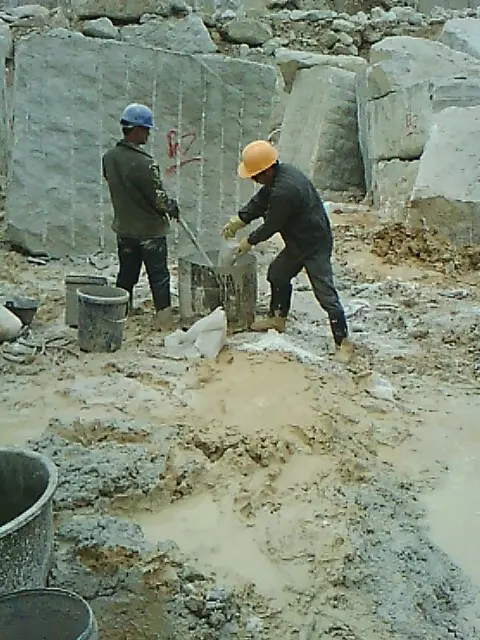
Field Application: Pouring slurry into a precisely designed concrete drilling pattern.
Step 3: Chunk Removal and Rebar Recovery
Cracks usually propagate within 12 to 24 hours. The expansion force overcomes the tension of the concrete, isolating the rebars. At this stage, a small excavator can easily pull away the fractured blocks, leaving the steel bars exposed and clean for cutting.
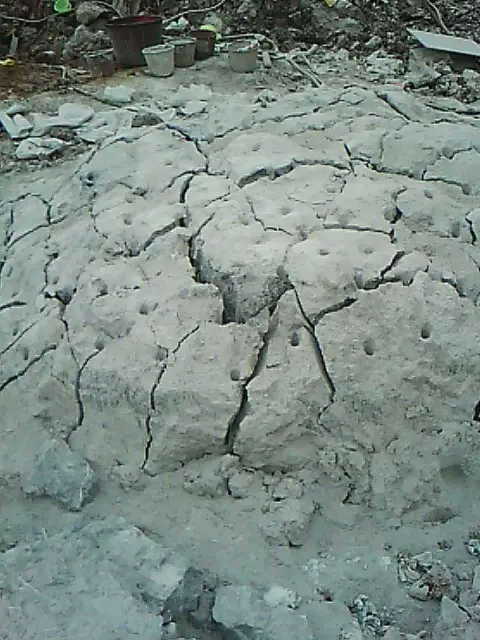
Result: Concrete cleanly separated from structural steel without vibration damage.
Concrete Demolition FAQ: Expert Technical Support
Q1: How much Static Cracking Agent do I need for a concrete foundation?
A: Consumption varies by hole spacing, but typically ranges from 15kg to 25kg per cubic meter. For an exact count based on your specific grid pattern, use our professional Dosage Calculator.
Q2: Can this chemical agent break high-strength (C50 or C60) concrete?
A: Yes. Expandag's high-range HSCA formula is specifically designed to exceed 120 MPa of expansive pressure. Since high-strength concrete is more brittle, it often fractures more cleanly than softer concrete, provided you use a diameter of 38mm-42mm.
Q3: How do I manage the rebar during the cracking process?
A: You do not need to remove the rebar beforehand. The agent creates cracks that radiate between the boreholes and toward the steel. Once the concrete is shattered, the bond with the rebar is broken, allowing for immediate removal and recycling.
Q4: Is there a vibration limit when using SCA near sensitive utilities?
A: The vibration level of non-explosive demolition agents is effectively zero. This makes it compliant with the strictest global standards for working near high-pressure gas lines, fiber-optic cables, and delicate historical foundations.
Q5: What is the primary safety risk when demolishing concrete beams?
A: When working on overhead beams, ensure the area below is cordoned off. While the process is static, the sudden fracturing of a large beam could lead to falling debris. Always wear a hard hat and safety goggles during the reactive phase (2-12 hours).
Q6: Why is Expandag HSCA preferred over traditional jackhammers for city projects?
A: Beyond noise and vibration control, using HSCA reduces labor costs by up to 40% in large-scale projects. It eliminates the need for expensive sound-barrier walls and allows contractors to secure permits for 24-hour operations in residential zones.
Planning a Complex Urban Demolition?
Get expert advice on borehole patterns and customized chemical grades for your specific project environment.