 EN
EN
 AR
AR

Mastering HSCA in Winter: Professional Guide to Using Soundless Cracking Agent at Low Temperatures
When temperatures drop below 10°C, the chemical hydration of expansive mortar slows down significantly. On most winter jobsites, the main complaint isn't that the product has failed, but that the reaction heat is being stolen by the frozen rock. To keep your project on schedule during the freezing months, you must manage the hydration heat of your winter type soundless cracking agent.
1. Select the Correct Low-Temperature HSCA Grade
Standard expansive mortars designed for 25°C will remain dormant in winter. You must use a specialized Low-Temperature HSCA formula (typically rated for -5°C to 10°C). These versions contain chemical accelerators that trigger the expansion process even when the rock mass is near freezing.
2. The "Kick-Start" Method: Using Warm Mixing Water
In summer, cold water prevents premature reaction. In winter, you need the opposite. To ensure non-explosive rock breaking in freezing temperatures, mix the powder with warm water (30°C to 40°C). This provides the initial thermal energy needed for the slurry to begin expanding.
⚠️ CRITICAL SAFETY: Never use water above 50°C. Boiling water will cause an instant "blow-out" (steam eruption), which can be extremely dangerous.
3. Optimize Hole Diameter for Heat Retention
In cold weather, volume equals heat. Small holes (30mm) lose their reaction heat too quickly to the surrounding cold rock. For using HSCA in low temperatures, we recommend increasing your borehole diameter to 38mm - 45mm.
Pairing your project with a high-torque YT28 Rock Drill and 40mm Tapered Button Bits ensures consistent, wide holes that maximize the chemical's expansion pressure.
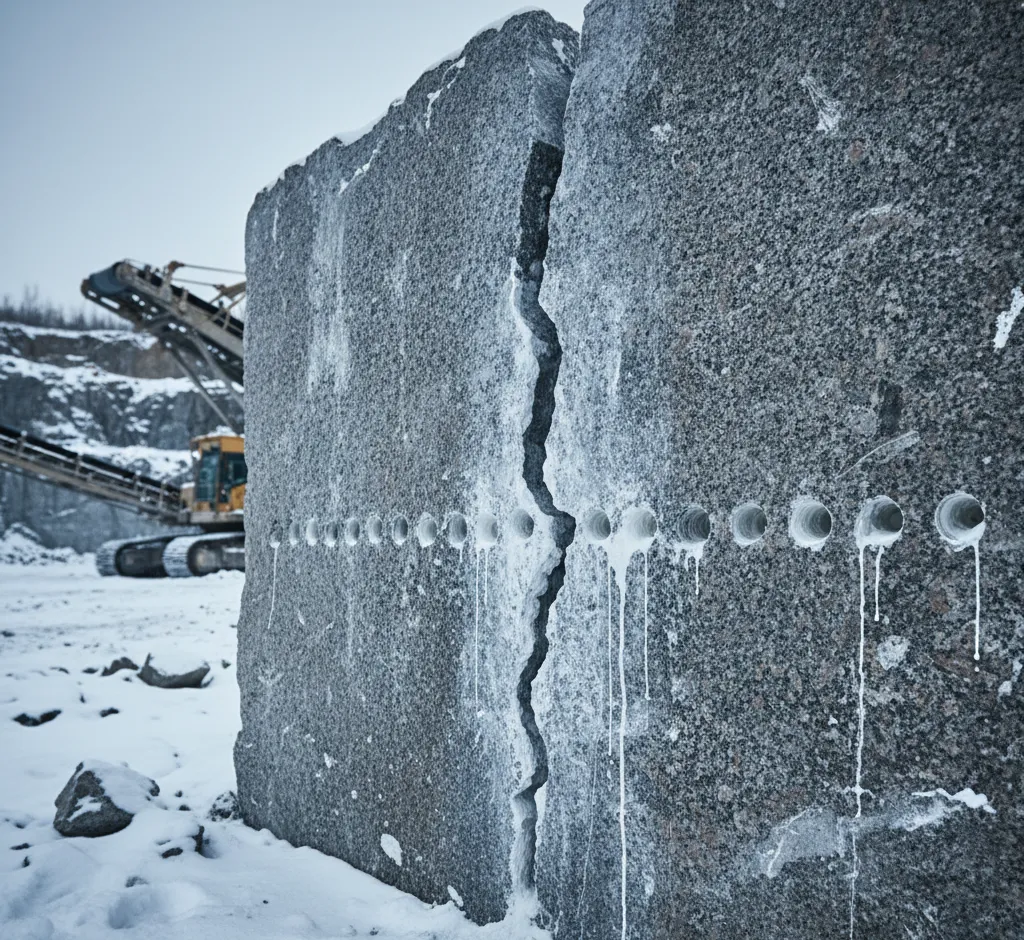
Field Operation: HSCA application in sub-zero conditions requiring thermal insulation.
4. Thermal Insulation: "Blanketing" the Boreholes
Wind chill is the enemy of winter demolition best practices. After pouring the slurry, you must trap the reaction heat. Cover the filled holes immediately with straw mats, plastic sheets, or heavy-duty tarps. This simple step can speed up the cracking time by 30% to 50% in extreme cold.
Winter vs. Summer Operation Comparison
| Parameter | Summer (25°C+) | Winter (< 10°C) |
|---|---|---|
| Water Temperature | Cold (approx. 15°C) | Warm (30°C - 40°C) |
| Hole Diameter | 30mm - 34mm | 38mm - 45mm |
| Initial Cracking | 4 - 8 Hours | 12 - 24 Hours |
Winter HSCA FAQs: Solving Cold Weather Issues
Q1: Why are the cracks not appearing after 12 hours in winter?
A: In winter, the expansive mortar reaction time is naturally extended. If you used the correct grade and warm water, simply wait. In extreme cold, it may take 24 to 48 hours for the pressure to overcome the rock's tensile strength.
Q2: Can I use anti-freeze in the mixture?
A: No. Standard construction anti-freeze will interfere with the chemical expansion of HSCA. Our winter-grade formula already contains the necessary accelerators. Stick to the warm water mixing method instead.
Q3: Is the dosage different for winter projects?
A: The expansive mortar winter vs summer dosage per linear meter remains the same, but because we recommend larger hole diameters in winter, the total consumption per cubic meter may increase. Use our Dosage Calculator to adjust for 40mm+ holes.
Q4: What should I do if the mixing water freezes on site?
A: You must store your water and HSCA powder in a heated container or indoors before mixing. Mixing frozen powder with cold water will result in a total failure of the expansion process.
Q5: Can blow-outs still happen in freezing weather?
A: Yes. Blow-outs occur when the core temperature of the slurry rises too fast. This usually happens if you use water over 50°C or if you pour the agent during a sudden afternoon temperature spike while using a low-temp grade.
Q6: Does the rock type affect winter reaction speed?
A: Absolutely. Dense rocks like granite hold the cold longer than porous limestone. For granite quarrying in winter, thermal insulation (covering the holes) is mandatory, not optional.
Q7: What is the absolute minimum temperature for using HSCA?
A: Our low-temperature grade is effective down to -5°C (23°F). If the ambient temperature is consistently below -10°C, the reaction may stop entirely unless the rock mass is pre-heated or heavily insulated.
Q8: Should I drill holes closer together in winter?
A: Yes. Because the reaction is slower, reducing the hole spacing by 10% to 15% can help the cracks connect faster before the slurry cools down too much.
Q9: Can I pour at night in winter?
A: We recommend pouring in the morning as the temperature rises. If you pour at night when the temperature is dropping, the hydration process may freeze and fail to reach peak pressure.
Planning a Winter Demolition Project?
Get the right winter-type stone cracking powder and technical support from Expandag engineers.