 EN
EN AR
AR
Expansive Mortar vs. Expansive Cement: What is the Difference?
💡 Executive Summary: In the civil engineering and mining sectors, people often confuse Expansive Mortar with Expansive Cement. While both rely on chemical volume expansion, their engineering purposes are complete opposites: one is designed to destroy, and the other is designed to build.
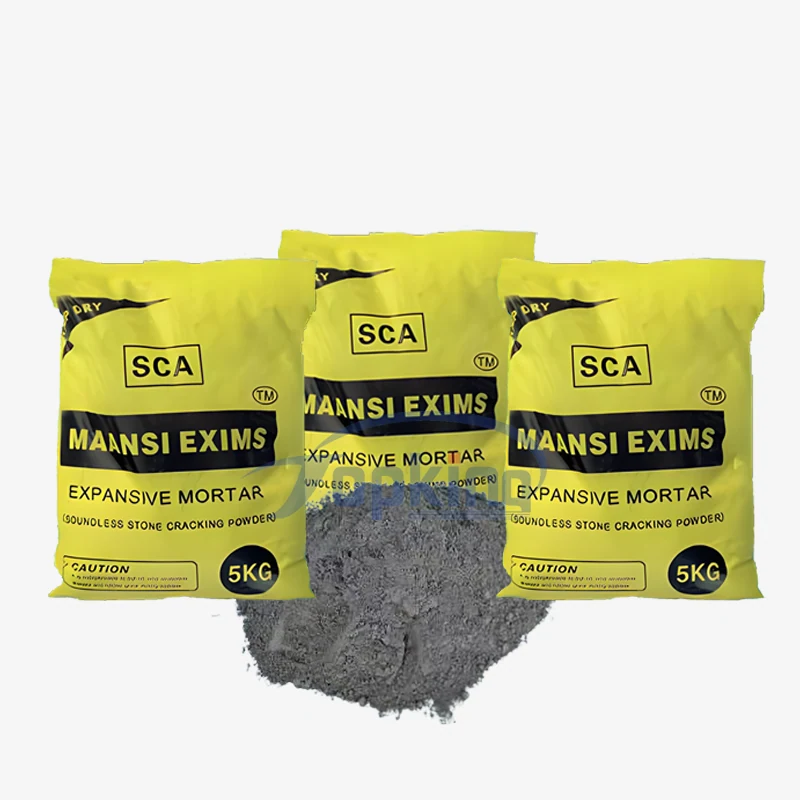
Expandag Stone Cracking Powder: Engineered for safe demolition.
1. The Destroyer: Expansive Mortar (Stone Cracking Powder)
Expansive Mortar, widely known in the industry as a Non-Explosive Demolition Agent (HSCA) or Stone Cracking Powder, is a highly reactive compound primarily based on calcium oxide.
Its sole purpose is controlled destruction. When mixed with water and poured into pre-drilled holes, it generates a massive internal expansion pressure exceeding 120 MPa (1200 kg/cm²). This sheer force tears apart hard granite, marble, and reinforced concrete from the inside out, silently and safely—without the noise, fly-rock, or toxic fumes associated with dynamite blasting.
2. The Builder: Expansive Cement
Expansive Cement is a specialized building material used in structural concrete. Standard concrete shrinks as it dries, which often leads to hairline cracking and water leaks. Expansive cement solves this by expanding slightly (usually a micro-expansion rate of 2% to 3%) during the hardening process.
This micro-expansion compensates for the natural shrinkage, creating denser, crack-resistant concrete. It is heavily utilized in waterproofing engineering, underground tunnels, bridge decks, and self-stressing concrete structures.
Technical Comparison Guide
| Technical Aspect | Expansive Mortar (HSCA) | Expansive Cement |
|---|---|---|
| Primary Function | Demolition & Rock Breaking | Construction & Waterproofing |
| Expansion Pressure | Massive (> 120 MPa) | Micro-level (Shrinkage compensating) |
| Application Method | Poured into drilled boreholes | Mixed into concrete foundations |
| Key Users | Quarries, Demolition Contractors | Civil Engineers, Builders |
⚠️ Engineering Safety Warning: Beware of "15-Minute" Claims
Some low-quality manufacturers claim their stone cracking powder works in 15 minutes. This is incredibly dangerous. If a chemical generates 120 MPa of pressure in 15 minutes, the intense heat will cause a violent steam blow-out. A safe, high-quality Expandag HSCA is formulated for a steady reaction, showing initial cracks in 2 to 8 hours and peaking within 24 hours.
Chemical Demolition FAQs
Q1: Can I use expansive cement to break rocks or concrete?
A: No. Expansive cement only generates enough pressure to compensate for drying shrinkage (about 2-3% volume change). To fracture hard materials, you must use Expansive Mortar (HSCA), which generates over 120 MPa of splitting force.
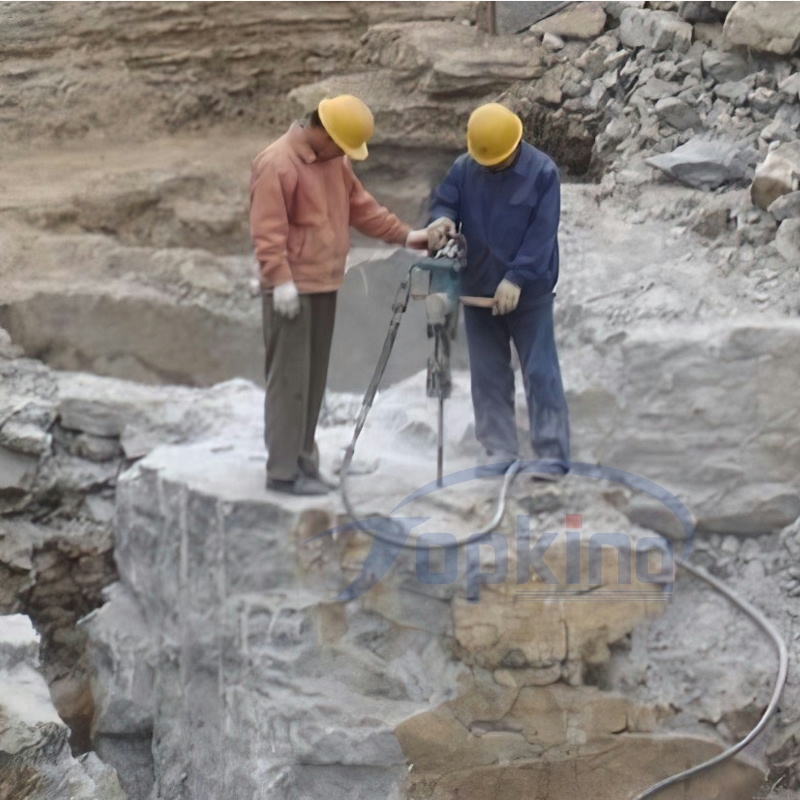
Q2: What equipment do I need to use Stone Cracking Powder?
A: Because the powder must be confined to generate pressure, you need to drill clean, straight holes. We recommend using standard Pneumatic Rock Drills to drill 38mm-45mm holes before pouring the chemical slurry.
Q3: How do I know how much expansive mortar to buy?
A: Consumption depends on your borehole diameter and spacing grid. To get a precise kg-per-meter estimate and avoid wasting money, use our free Dosage Calculator.
Need High-Yield Demolition Chemicals?
Expandag provides factory-direct Soundless Cracking Agents and pneumatic drilling tools for global contractors.