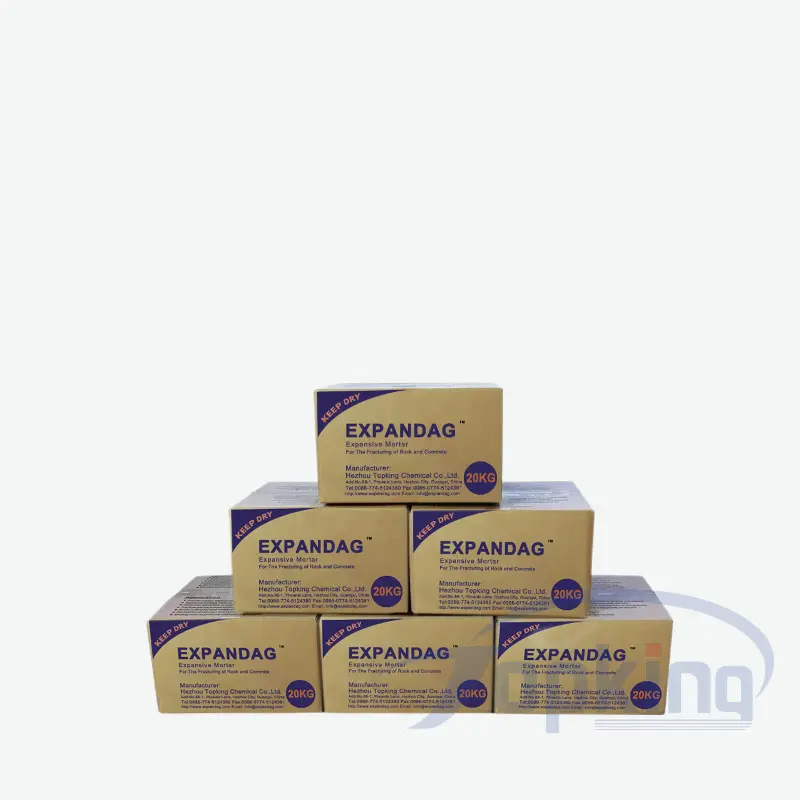
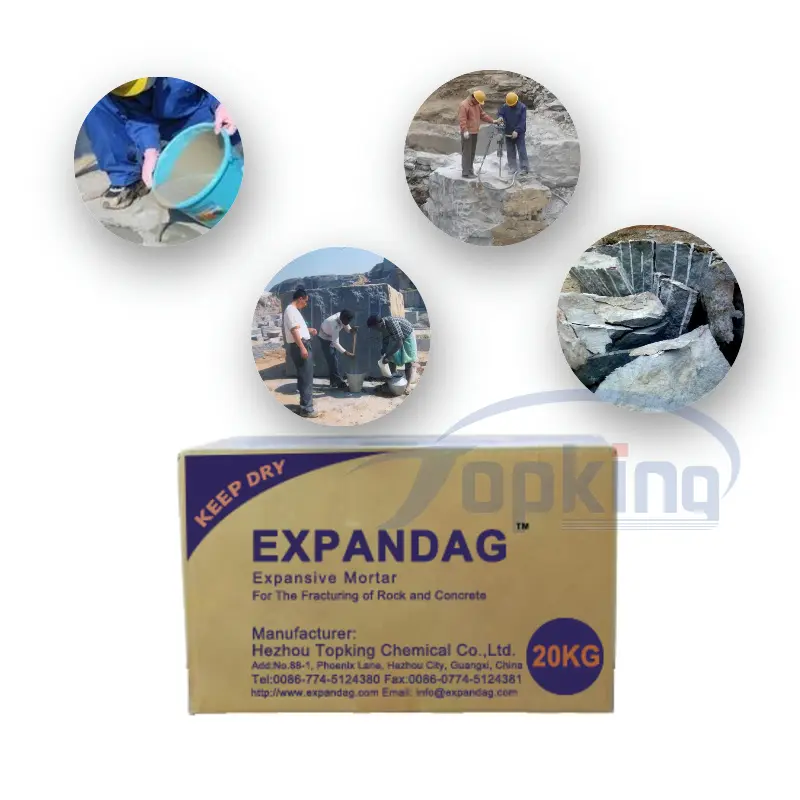
EXPANDAG HSCA-3 is a cold weather grade soundless cracking agent rated for -5°C to 10°C ambient operating conditions. It generates 120-130MPa expansion pressure through CaO hydration with an accelerated reaction formula that compensates for low-temperature slowdown. Crack initiation time is 12-24 hours in freezing conditions. Mix with warm water at 20°C-30°C at a 28-30% water ratio. Borehole diameter: 38-42mm. Required in winter quarrying, mining, and concrete demolition in Russia, Canada, Northern Europe, and high-altitude operations where HSCA-2 standard grade underperforms below 10°C.
Brand: EXPANDAG
Model: HSCA-3 (Cold Weather Grade)
Temperature Range: -5°C to 10°C (23°F to 50°F)
Package: 20kg sealed carton / 1-tonne FIBC bulk bag
Application: Winter mining, quarrying and concrete demolition in freezing climates (Russia, Canada, North Europe, High-Altitude Sites).
HSCA-3 (Cold Weather Grade) is part of EXPANDAG's temperature-graded Expansive Mortar system. While HSCA-2 standard grade underperforms below 10°C, HSCA-3 ensures reliable rock breaking and concrete demolition through winter — with the same 120-130MPa expansion pressure as other grades.
| Performance Item | Technical Data |
|---|---|
| Model | HSCA-3 (Cold Weather Grade) |
| Operating Temperature Range | -5°C to 10°C (23°F to 50°F) |
| Expansion Pressure | 120-130 MPa |
| CaO Purity | >=90% |
| Water Ratio | 28-30% by mass (use warm water 20°C-30°C) |
| Borehole Diameter | 38-42mm |
| Typical Crack Initiation Time | 12-24 hours in freezing conditions |
| Packaging | 20kg sealed carton / 1-tonne FIBC bulk bag |
| Shelf Life | 12 months in sealed packaging |
| Model | Temperature Range | Regional Recommendation |
|---|---|---|
| HSCA-1 | 25°C to 40°C | Summer / Middle East / Africa |
| HSCA-2 | 10°C to 25°C | Spring and Autumn / Standard Projects |
| HSCA-3 (This Product) | -5°C to 10°C | Winter / North America / Europe / High Altitude |
Use Warm Mixing Water: Mix with water at 20°C-30°C to compensate for low ambient temperature and maintain reaction rate.
Insulate Boreholes: Cover filled holes with insulating mats or thermal blankets to retain reaction heat and accelerate crack initiation.
Extend Observation Window: Allow 12-24 hours for crack development — do not disturb boreholes during this period.
Correct Borehole Geometry: Use EXPANDAG pneumatic rock drills with 38-42mm diameter bits and 30-50cm spacing for standard rock formations.
Grade Matching: HSCA-3 is rated for -5°C to 10°C only. Above 10°C, switch to HSCA-2 standard grade.
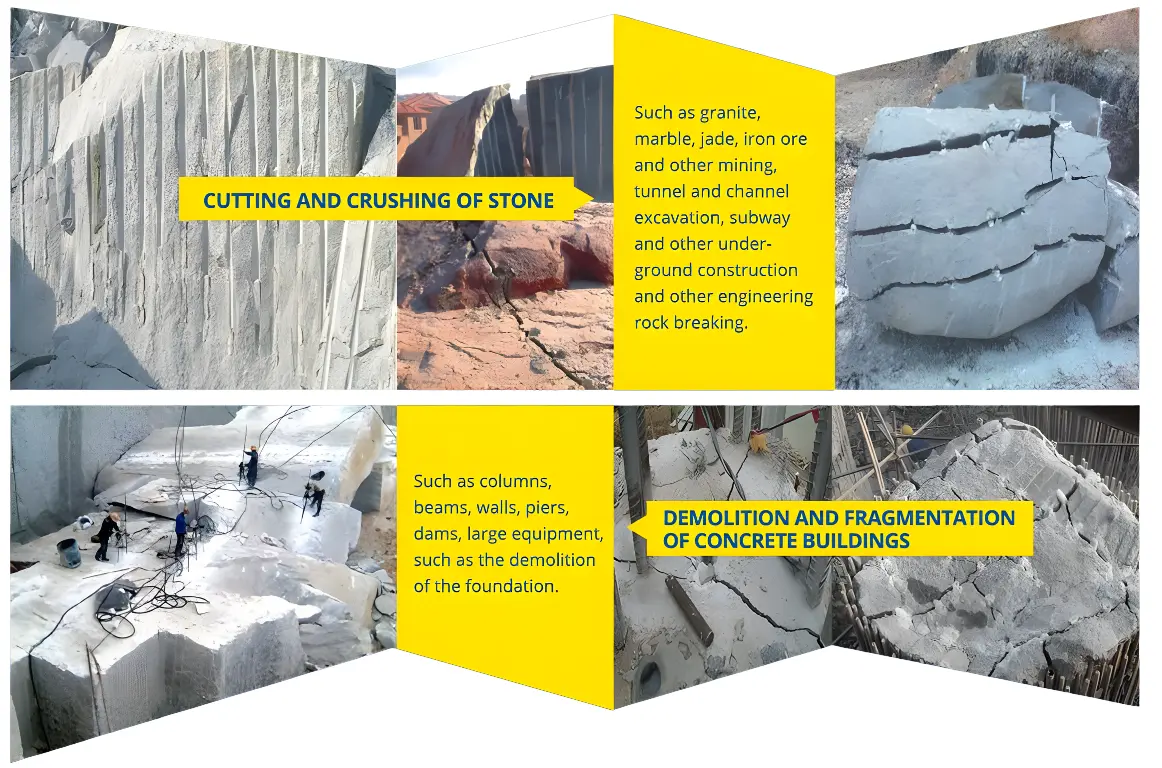
Year-Round Production: Continue quarrying and demolition through winter without project delays.
Same Expansion Pressure: 120-130MPa — identical to HSCA-1 and HSCA-2, regardless of ambient temperature.
No Explosives Required: No blasting permit, no flyrock, no vibration — suitable for winter operations near infrastructure and residential areas.
Factory Direct Supply: EXPANDAG manufactures all three grades in-house — consistent CaO purity >=90% with batch documentation available on request.
Global Export: Supplied to contractors in Russia, Canada, Scandinavia, and high-altitude mining operations worldwide.
Q: What happens if I use HSCA-3 above 10°C?
A: Above 10°C, HSCA-3's accelerated reaction formula produces faster pressure onset than standard borehole geometry can safely contain, increasing blowout risk. For ambient temperatures above 10°C, use HSCA-2 (10°C-25°C) or HSCA-1 (25°C-40°C). Always match the grade to the ambient temperature at the time of filling.
Q: Does HSCA-3 work on frozen concrete foundations?
A: Yes. HSCA-3 is effective for breaking reinforced concrete in sub-zero conditions, provided warm mixing water (20°C-30°C) is used and boreholes are insulated after filling. Reduce borehole spacing to 25-35cm in reinforced concrete compared to standard rock applications.
Q: What is the correct water ratio for winter expansive mortar?
A: 28-30% water by mass — approximately 1.4-1.5 litres of warm water (20°C-30°C) per 5kg of HSCA-3 powder. Weigh water accurately; do not estimate by volume. Excess water above 30% reduces expansion pressure and produces erratic crack propagation.
Q: How long does HSCA-3 take to crack rock in freezing conditions?
A: 12-24 hours in typical freezing conditions (-5°C to 5°C). Using warm mixing water and insulating boreholes after filling can accelerate crack initiation. Do not disturb or inspect boreholes within the first 12 hours.
Q: How much HSCA-3 is needed per cubic metre of rock?
A: Typically 12-20kg per cubic metre, depending on borehole diameter, spacing, and rock hardness. Hard granite in winter conditions requires tighter hole spacing (30-35cm) compared to softer limestone or sandstone (40-50cm).
Q: How is HSCA-3 shipped to cold regions like Canada or Russia?
A: HSCA-3 ships as a standard non-hazardous construction chemical — no explosives documentation required. Moisture-proof sealed 20kg cartons or 1-tonne FIBC bulk bags are used for long-distance shipping. Store in dry covered conditions; shelf life is 12 months in intact sealed packaging.
Q: What PPE is required when using winter expansive mortar?
A: Chemical splash goggles, full face shield, alkali-resistant gloves, and long-sleeve arm coverage are required for all HSCA filling operations. HSCA slurry is strongly alkaline (pH 12-13) and causes chemical burns on skin and eye contact. An eye wash station must be within 10 seconds walking distance of the filling zone.
Q: Is HSCA-3 safe for environmentally sensitive winter sites?
A: Yes. HSCA-3 is a non-explosive construction chemical — no blast overpressure, no flyrock, no seismic impact. Suitable for winter operations near pipelines, waterways, heritage structures, and urban residential areas where conventional blasting is prohibited or restricted.
Looking for other temperature grades? Explore the complete EXPANDAG HSCA Expansive Mortar range — HSCA-1 for hot climates (25°C-40°C) and HSCA-2 for standard operations (10°C-25°C).
EXPANDAG™ Expansive Mortar (Soundless Cr···
المزيد
EXPANDAG HSCA-1 summer grade expansive m···
المزيد
EXPANDAG HSCA-3 Winter Expansive Mortar ···
المزيد
EXPANDAG Concrete Demolition Powder (HSC···
المزيد EN
EN AR
AR