 EN
EN AR
AR
What is HSCA (Soundless Cracking Agent)?
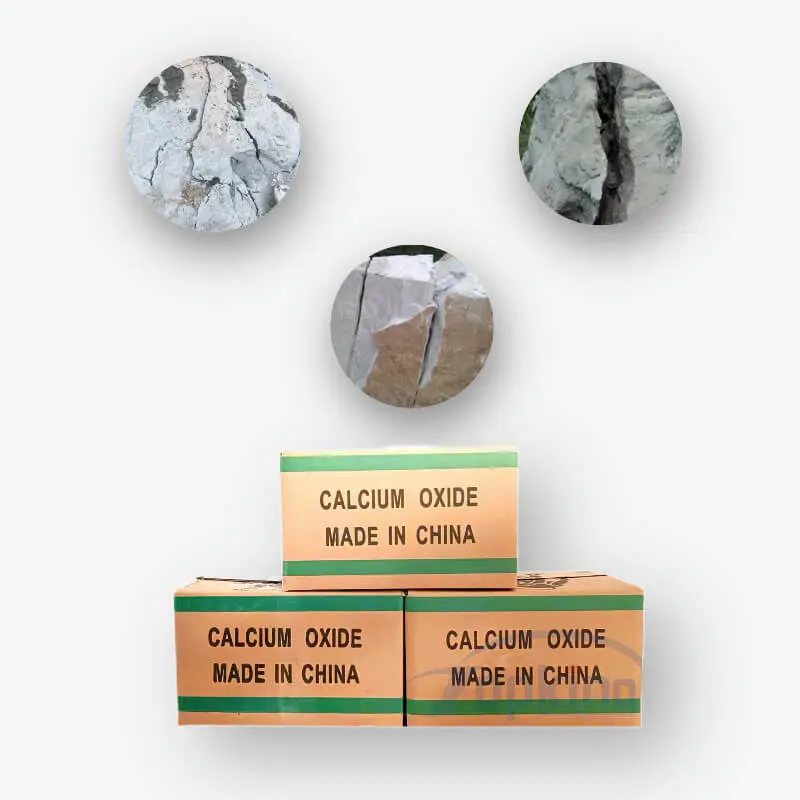
HSCA, technically defined as a high-range Soundless Cracking Agent, is a non-explosive demolition chemical that expands through hydration when mixed with water. By exerting controlled expansive pressure (exceeding 120 MPa under laboratory conditions) within pre-drilled boreholes, it fractures hard rock and reinforced concrete without the shockwaves, noise, or vibration associated with traditional blasting.
Technical Comparison: HSCA vs. Traditional Blasting
| Performance Variable | Expandag HSCA (SCA) | Standard Explosives |
|---|---|---|
| Seismic Impact | Negligible (Static Expansion) | High (Seismic Shockwaves) |
| Acoustic Level | Silent (Approx. 60-65 dB) | Intense (>120 dB) |
| Maximum Pressure | > 120 MPa (Lab Tested) | High Instantaneous Energy |
| Material Yield | Higher Block Recovery | High Waste due to Micro-fracturing |
The "Drill & Crack" Engineering Method
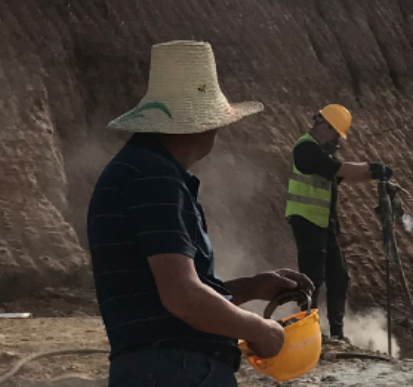
The efficiency of chemical rock breaking is dictated by the precise interaction between borehole geometry and expansion timing. Professional operators often pair the 120 MPa expansive force with high-torque pneumatic rock drills to ensure straight, uniform holes that maximize stress distribution toward the free face.
Standard Operating Procedure (SOP)
Borehole Optimization: Drill holes (34mm-45mm) at depths calculated to 105% of the target height. Ensure the holes are cleared of rock dust and water.
Technical Calculation: Determine the required weight of expansive mortar using our HSCA Dosage Estimator.
Controlled Mixing: Maintain a 28%-32% water ratio. Mechanical mixing is recommended to ensure a consistent, lump-free slurry.
Strategic Filling: Pour the agent into the holes within 10 minutes of preparation to prevent premature hydration heat buildup.
Reaction Phase: Initial stress fractures typically occur between 2-8 hours, with full fragmentation completing within 24 hours.
Safety Advisory: To mitigate the risk of steam-driven "blow-outs," always match the HSCA grade to the ambient site temperature and avoid looking directly into filled boreholes for the first 6 hours.
Technical FAQs: SCA Performance & Usage
Q1: How long does the Soundless Cracking Agent take to fracture rock?
A: Cracking timing varies by temperature and rock density. Micro-fractures usually appear within 2 to 8 hours. Reaching peak 120 MPa expansive force (lab-tested) typically requires 24 hours in stable conditions.
Q2: Can HSCA effectively demolish C50+ high-strength concrete?
A: Yes. The high-range formula is designed to overcome the high tensile strength of reinforced concrete. For dense structures, reducing borehole spacing (15-25cm) ensures the fractures connect across the rebar mesh.
Q3: Why is 120 MPa pressure necessary for granite quarrying?
A: High-tensile rock like granite requires massive force to split. HSCA generates a steady, non-violent pressure that splits the stone along the grain, preserving block quality better than impact-based tools.
Q4: Is HSCA safe for use in vibration-sensitive urban zones?
A: Absolutely. As a non-explosive demolition agent, it operates at a noise level of 60-65 dB with zero ground vibration, making it compliant with strict urban noise regulations near hospitals and schools.
Q5: What are the primary factors for successful storage?
A: HSCA is highly reactive to moisture. It must be stored in original, sealed vacuum bags in a dry environment. Exposure to high humidity can reduce its expansive efficiency significantly.
Q6: Does HSCA require special international freight permits?
A: No. HSCA is certified as Non-Dangerous Goods (Non-DGR) for sea and air shipping. We provide full MSDS documentation to ensure smooth global logistics and customs clearance.
Technical Support for Demolition Projects
Expandag (Hezhou Topking) provides factory-direct solutions for high-range expansive mortar and pneumatic rock drills. Contact our team for MSDS and bulk quotes.